
The Valley
Buena Vista Museum: Bakersfield's Sharktooth Hill Fossils
Bakersfield's natural history museum holds the world's largest collection of Miocene-era fossils from Sharktooth Hill, a 15-million-year-old marine bonebed.
Updated September 2026
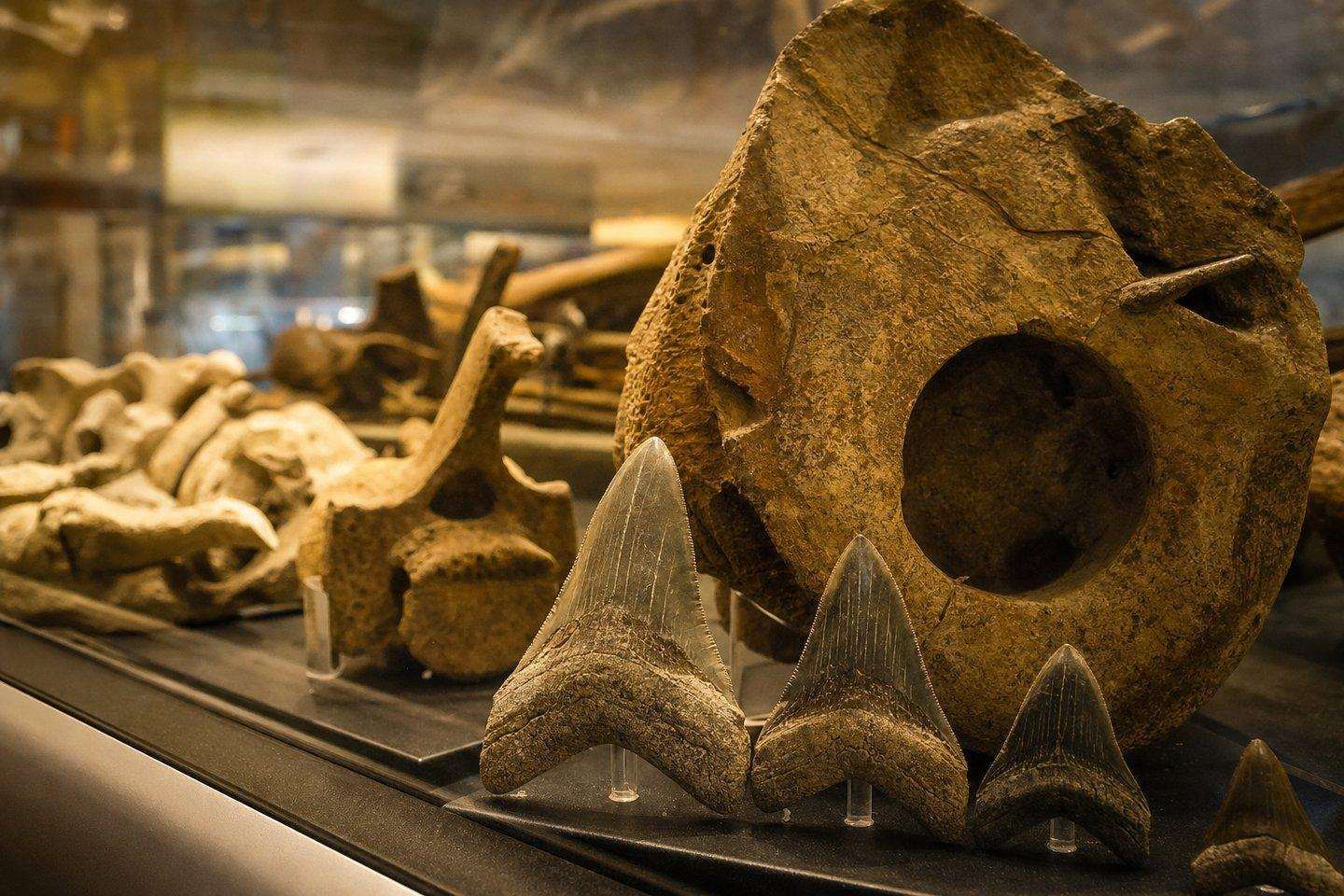
Fifteen million years ago, the Bakersfield area sat under a shallow sea. That fact isn’t a footnote here: it’s the whole reason a natural history museum exists in a city better known for oil derricks and almond orchards. The Buena Vista Museum of Natural History & Science, tucked into downtown Bakersfield’s arts district, holds the world’s largest known collection of fossils from one of the richest marine fossil beds in North America, found just northeast of the city.
What Sharktooth Hill actually is
Sharktooth Hill is a fossil-bearing rock formation in Kern County dating back roughly 15 million years, to the Miocene epoch, when an inland sea covered much of what’s now the southern San Joaquin Valley. What makes the site remarkable isn’t just its age: it’s the density. The layer known as the “bonebed” holds fossil concentrations that can reach several hundred specimens per cubic yard in places, an unusually rich accumulation that has made it one of the most studied marine fossil sites in the country since paleontologists began seriously excavating it in the 20th century.
The fossils themselves tell the story of that ancient sea and the animals living around its edges: sharks and sea lions from the water, alongside land animals like deer, elk, and camels whose remains ended up preserved in the same formation. It’s an unusual mix for a single site: evidence of a coastline environment where marine and terrestrial life overlapped, fossilized together at a scale that’s rare anywhere in the world.
The museum built around it
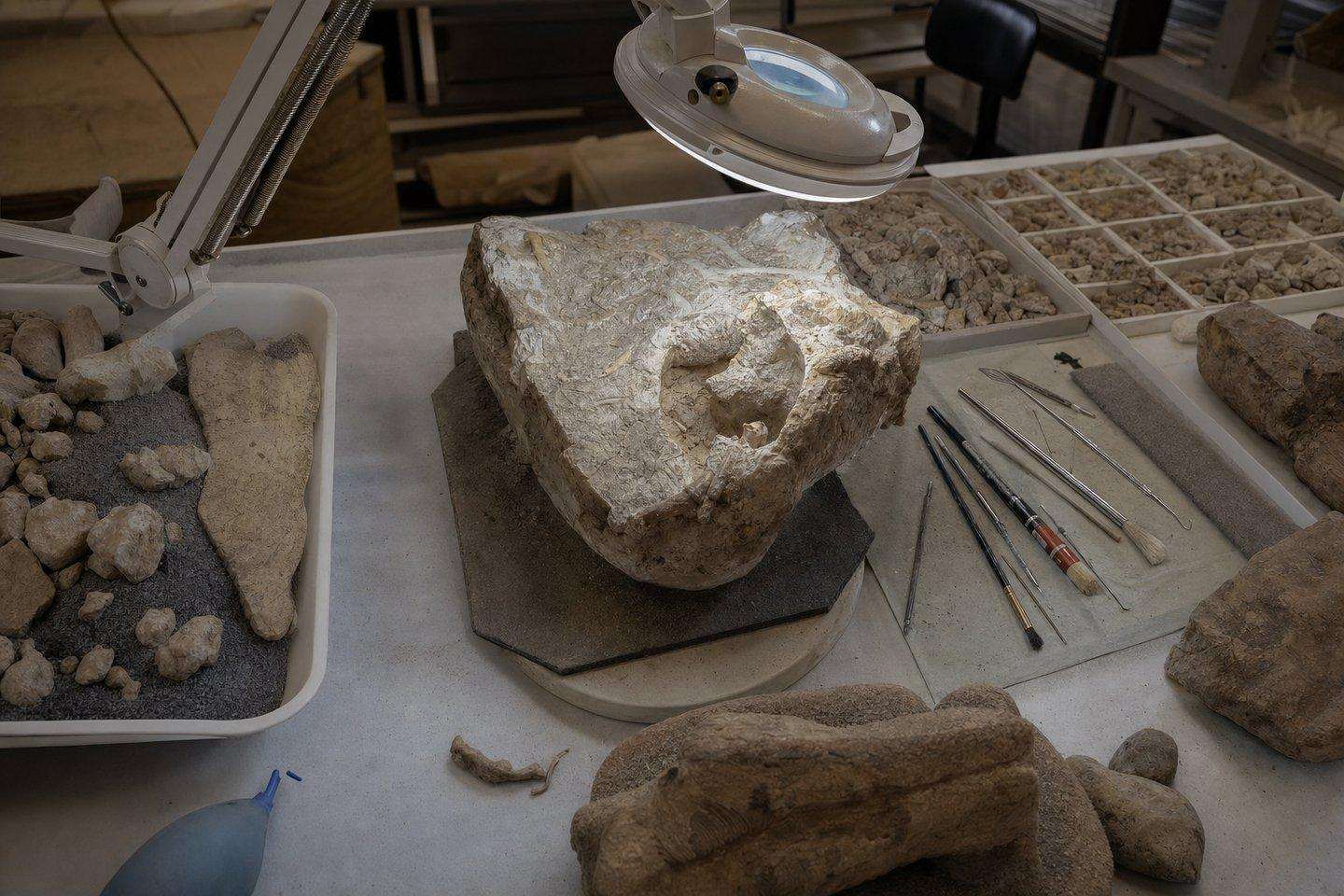
The Buena Vista Museum of Natural History & Science was founded in 1995, and its core holdings center on the Bob and Mary Ernst Collection: the largest assembled collection of Miocene-era fossils from Sharktooth Hill anywhere. The museum organizes its exhibits around three areas: geology, anthropology, and paleontology, giving the Sharktooth Hill material scientific context rather than displaying it as a standalone curiosity. It also runs a working Paleo Lab on-site, where staff and volunteers clean, repair, preserve, and reconstruct fossils and other artifacts: visible, hands-on paleontology rather than a purely static exhibit hall.
Digging for your own fossil
For visitors who want more than a look through glass, the museum runs organized Paleo Dig trips out to the Ernst Quarries at the Sharktooth Hill site roughly twice a year, the same quarries that supplied the Bob and Mary Ernst Collection the museum is built around. Participants who join a dig can generally keep what they find, with the exception of anything scientifically significant enough to belong in the museum’s own research collection, a genuinely rare opportunity to take part in real fossil excavation rather than a staged activity, on a site whose scientific value is well established rather than speculative. Spots are limited and typically require advance registration through the museum, so it’s not the kind of trip a visitor can show up for on a whim.
Visiting
The museum is located at 2018 Chester Ave in downtown Bakersfield, inside the city’s small arts district, an easy pairing with a stop at the nearby Historic Fox Theater or Stars Theatre if a visitor is spending an afternoon downtown. Hours run Thursday through Saturday, 10 a.m. to 4 p.m., and Sunday, noon to 4 p.m. Since hours and any special Paleo Dig dates can shift, it’s worth checking the museum’s own site before a visit, especially if a dig trip is the goal.
Admission runs $10 for adults, $8 for seniors 60 and older and students age 12 and up, and $6 for children ages three to 11, with kids two and under free. The museum also runs a few standing discount days worth planning around: reduced family pricing on the first Saturday of the month, discounted senior admission on the second Saturday, and $2 admission for all ages on the third Thursday.
Gift shop, groups, and a reciprocal membership
Beyond the exhibits, the museum runs a small gift shop stocked with books, fossils, and science-themed items for kids, a reasonable last stop before heading out. It also hosts school and group visits regularly, a natural fit for a museum built around a genuinely rare local excavation site, with group admission available at a reduced per-person rate for parties of 20 or more. One detail worth knowing for anyone planning a longer Bakersfield stay: a CALM membership (the county’s zoo, on the other side of the city) includes reciprocal free admission to the Buena Vista Museum, making the two attractions an easy pair to combine on a single membership.
Frequently Asked Questions
What is the Buena Vista Museum of Natural History known for?
Its Sharktooth Hill fossil collection: the largest known collection of Miocene-era marine fossils from Sharktooth Hill, a 15-million-year-old fossil bonebed northeast of Bakersfield, centered on the Bob and Mary Ernst Collection.
What is Sharktooth Hill?
A fossil-bearing rock layer in Kern County, about 15 million years old, with an unusually dense concentration of marine fossils (sometimes several hundred specimens per cubic yard) from an ancient sea that once covered the area.
What kinds of fossils are at the museum?
Bones and teeth from extinct sea creatures found at Sharktooth Hill, including sharks and sea lions, alongside land-animal fossils like deer, elk, and camels. The museum organizes its collection around geology, anthropology, and paleontology.
Can visitors dig for fossils at Sharktooth Hill?
Yes, the museum runs organized Paleo Dig trips to the site roughly twice a year, where participants can keep what they find unless a specimen turns out to be scientifically significant.
Where is the Buena Vista Museum and what are its hours?
It's located at 2018 Chester Ave in downtown Bakersfield's arts district, open Thursday through Saturday, 10 a.m. to 4 p.m., and Sunday, noon to 4 p.m.