
The Desert
Mojave Air & Space Port: Aircraft Boneyard and Spaceflight History
A working desert airport that stores retired airliners and, in 2004, became the first FAA-licensed spaceport: launch site of the first private spaceflight.
Updated September 2026
Most airports exist to move passengers. Mojave Air and Space Port does something stranger: it stores retired jetliners by the dozen in the desert sun, and it’s also the place where a private company first put a human being into space.
From a mining airfield to a boneyard and test site
The airport’s history goes back to 1935, when it opened as a small, rural airfield serving the local gold and silver mining industry, a modest start for a place that would later become one of the more unusual airports in the country. In July 1942, the U.S. Marine Corps took over the field and expanded it substantially as Marine Corps Auxiliary Air Station (MCAAS) Mojave, part of the wartime buildup across the Mojave Desert’s flat, reliably clear airspace.
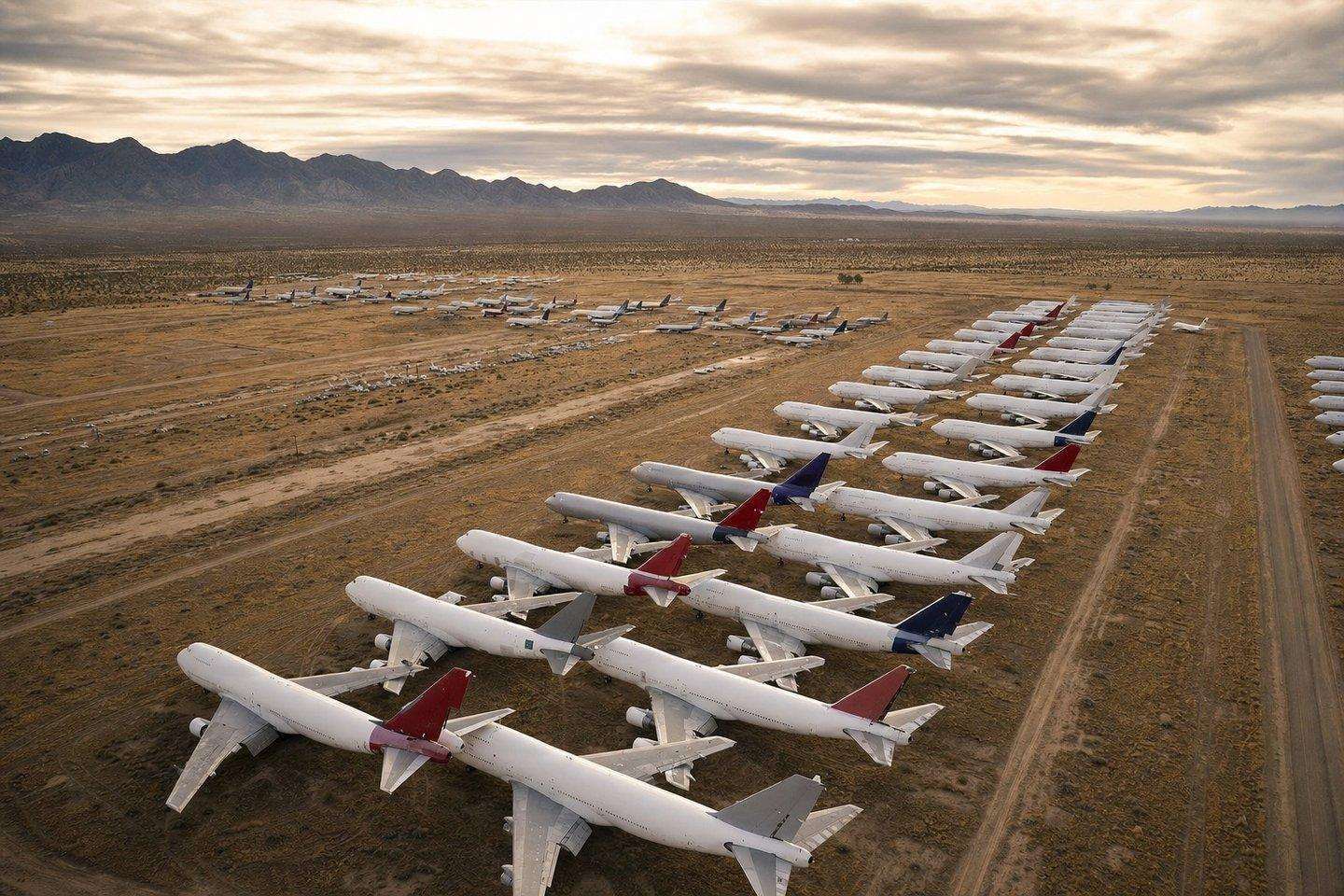
Today the facility runs on three main functions: it’s a general-use public airport, an aircraft flight-test site, and (most visibly to anyone driving past) an aircraft storage and heavy-maintenance boneyard. Mojave’s dry desert climate is exactly what makes long-term aircraft storage practical: low humidity slows corrosion in a way a coastal or humid airport simply can’t match. Retired commercial jetliners from Boeing, McDonnell Douglas, Lockheed, and Airbus, including widebody aircraft once flown by major domestic and international airlines, sit parked in long rows here, some awaiting resale, some being stripped for parts, some simply waiting out their retirement in the desert air.
The first licensed spaceport in the country
Mojave’s more remarkable distinction came on June 17, 2004, when the FAA designated it a licensed spaceport: the first facility in the United States licensed for horizontal launches of reusable spacecraft. The timing wasn’t a coincidence: just four days later, on June 21, 2004, Scaled Composites’ SpaceShipOne launched from Mojave and completed the first privately funded human sub-orbital spaceflight, proving that commercial spaceflight (not just government space programs) was genuinely possible. SpaceShipOne was designed by legendary aerospace engineer Burt Rutan and built by his company, Scaled Composites, developed and flown under Mojave Aerospace Ventures, a joint venture between Rutan’s firm and Microsoft co-founder Paul Allen.
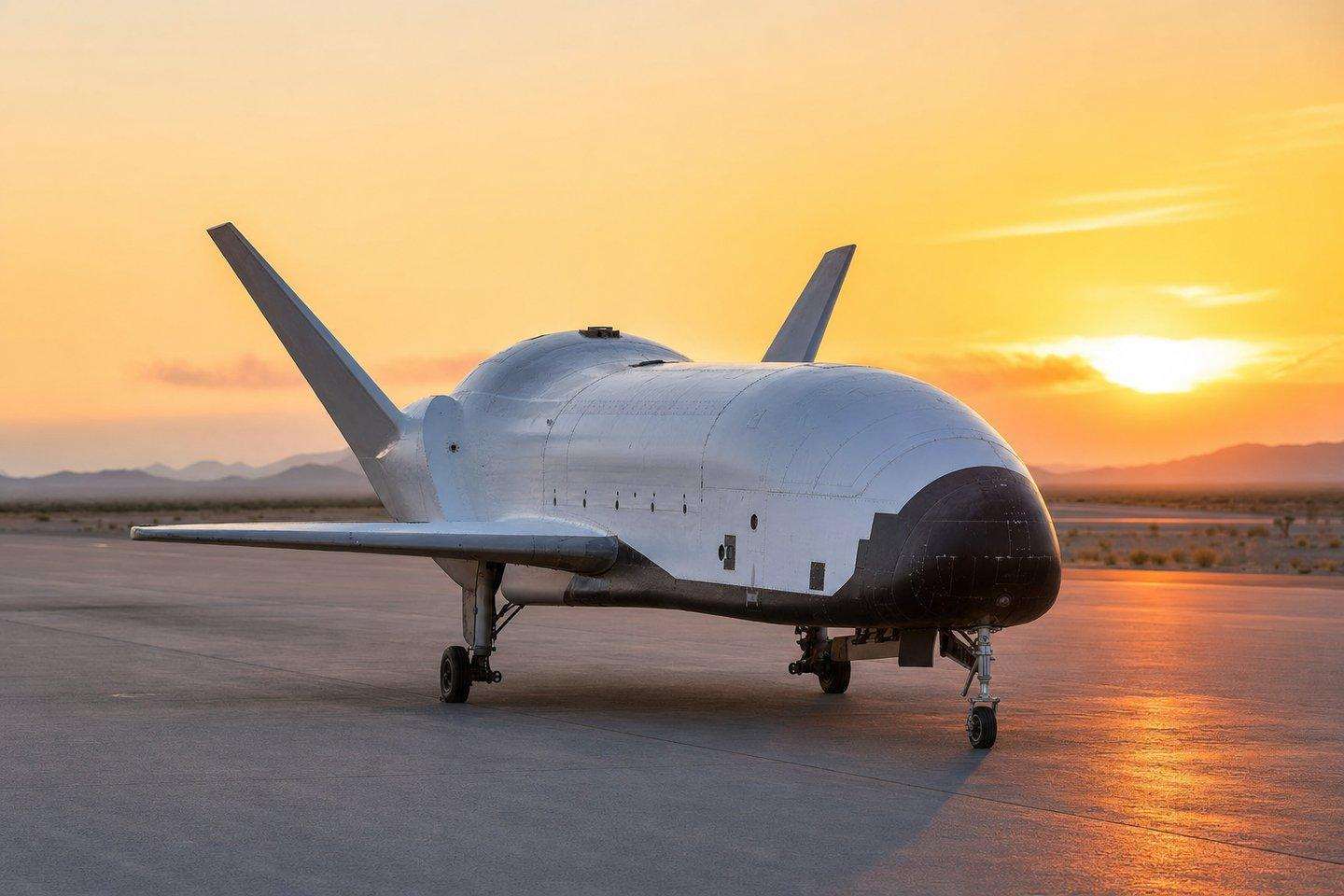
SpaceShipOne wasn’t a one-off. Rutan’s earlier Voyager aircraft, the first plane to fly around the world without stopping or refueling, was also built at Mojave, though it departed for its actual record-setting 1986 flight from nearby Edwards Air Force Base. More recently, Stratolaunch, the largest aircraft in the world by wingspan, was designed and first flown at Mojave, continuing the airport’s role as a place where genuinely experimental aerospace projects get built and tested outside the constraints of a government-run facility.
A cluster of aerospace companies, not just one
SpaceShipOne’s success turned Mojave into something like a proving ground for the whole commercial spaceflight industry, and the airport has hosted a genuine cluster of aerospace companies since, not just the one program that made it famous. Scaled Composites, Burt Rutan’s company, remains based at Mojave and has continued developing experimental aircraft there. The Spaceship Company, formed to build Virgin Galactic’s later spacecraft, and Virgin Galactic itself both ran early development and testing work out of Mojave before Virgin Galactic eventually shifted its commercial operations to New Mexico’s Spaceport America. XCOR Aerospace and Masten Space Systems, two smaller rocket-propulsion companies that worked on reusable vehicle technology, were also based at the airport for years. That concentration of aerospace companies working in close proximity, sharing runway space with a boneyard full of retired airliners, has earned Mojave an informal nickname in aerospace circles: some in the industry call it the Silicon Valley of space.
Visiting
There’s no formal public tour through the boneyard rows or the flight-test facilities. This is a working commercial and aerospace-testing airport, not a museum. But the public roads around the airport offer real views of the parked-aircraft rows that make Mojave visually unlike anywhere else in Kern County, and the Voyager Restaurant, an aviation-themed diner inside the airport overlooking the active flight line, is open to the public and makes a genuinely good stop for anyone driving Highway 14 through the desert.
The airport sits right at the junction of Highway 14 and Highway 58, on the edge of the town of Mojave, making it an easy stop whether you’re coming up from the Antelope Valley on 14 or over the pass from Bakersfield and Tehachapi on 58. Because the site sits in open desert with little shade, a visit is more comfortable outside the peak summer months, or early in the day if you do go in summer, and it combines naturally with a stop at the Tehachapi wind farms or a longer drive up Highway 14 rather than requiring a dedicated trip of its own.
Frequently Asked Questions
What is the Mojave Air and Space Port?
A working airport in Mojave, California (officially Mojave Air and Space Port at Rutan Field) that combines three roles: a general-use public airport, an aircraft storage and heavy-maintenance boneyard, and a licensed commercial spaceflight test site.
Why are there so many parked airliners at Mojave?
Mojave's dry desert climate is ideal for long-term aircraft storage, and the facility serves as a boneyard for retired commercial jetliners, including Boeing, McDonnell Douglas, Lockheed, and Airbus widebodies, many stored, salvaged for parts, or prepared for resale.
What makes Mojave a spaceport?
The FAA designated it a licensed spaceport on June 17, 2004. It was the first facility in the country licensed for horizontal launches of reusable spacecraft. Days later, on June 21, 2004, Scaled Composites' SpaceShipOne launched from Mojave on the first privately funded human sub-orbital spaceflight.
What aerospace projects have been developed at Mojave?
SpaceShipOne (2004's first private human spaceflight, designed by Burt Rutan and built by Scaled Composites), Rutan's round-the-world Voyager aircraft, and Stratolaunch, the largest aircraft in the world by wingspan, were all designed and first flown at Mojave.
Can visitors see the Mojave Air and Space Port?
There's no formal public tour of the boneyard or flight-test facilities, but the airport's public roads offer real views of the parked-aircraft rows, and the Voyager Restaurant, an aviation-themed diner inside the airport overlooking the flight line, is open to the public.