
The Valley
West Kern Oil Museum: Taft's Oil Boom History
In Taft, a volunteer-run museum built around a surviving 1917 wooden derrick tells the story of the Midway-Sunset Oil Field, California's largest.
Updated September 2026
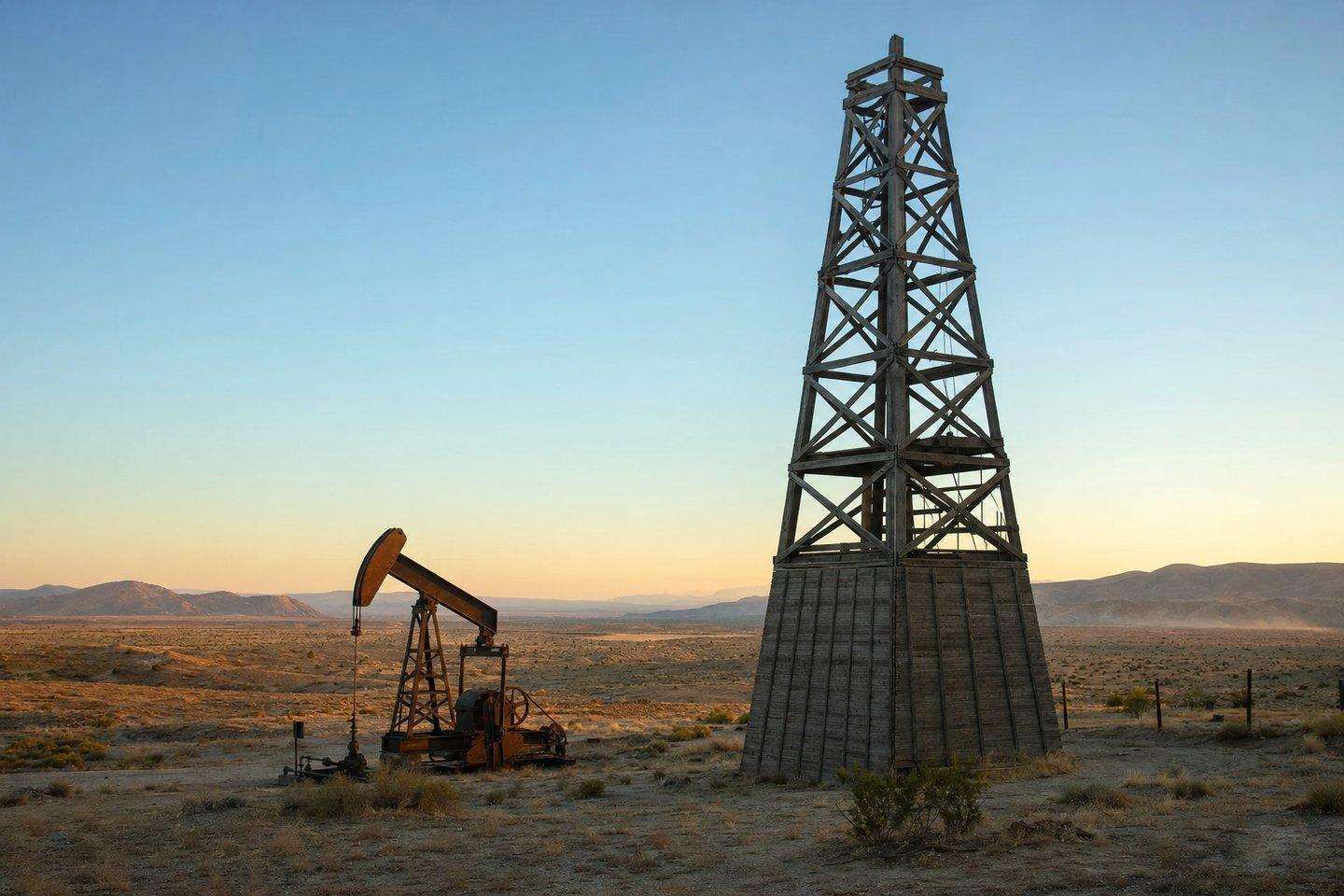
Most visitors driving Highway 33 or Highway 119 through Kern County’s western hills see the same thing for miles: pumpjacks working steadily across dry, rolling terrain, some old enough to have been running since before their grandparents were born. This is oil country, and has been for more than a century. Taft, the small city at the center of it, tells that history at a single volunteer-run museum built around a piece of the real thing: a wooden derrick that has stood since 1917.
How Taft became an oil town
The town wasn’t always called Taft. It started as a settlement named Moron, on the western edge of Kern County, before oil changed everything. As exploratory wells across the surrounding hills began striking crude in the first decade of the 1900s, the town renamed itself in 1909 in honor of President William Howard Taft and incorporated the following year, on November 7, 1910. The timing wasn’t a coincidence: derricks were going up faster than the town could house the workers arriving to build and run them, and a proper civic identity followed the boom rather than the other way around.
The scale of the boom is hard to overstate. By 1903, oil production had already made California the leading oil-producing state in the country, and the hills around Taft became one of its most productive corners. By the mid-1920s, more than 7,000 wooden derricks stood across the landscape surrounding the town: a forest of timber towers where, a generation earlier, there had been open scrubland. Workers flooded in from across the country to work the fields, and Taft grew from a scattering of tents and shacks into a functioning oil-industry city almost overnight.
The Midway-Sunset Oil Field
The oil beneath Taft belongs to the Midway-Sunset Oil Field, first developed starting around 1890 and expanded dramatically after major strikes in 1909. It is, by most measures, the single most significant oilfield in California’s history: the largest oilfield in the state and the largest in the continental United States by total oil in place, holding an estimated 27 billion barrels, most of it heavy crude. Its scale isn’t just a historical footnote: a full century after its discovery, Midway-Sunset was still the top-producing oilfield in the lower 48 states as recently as 1990, and it remains an active production area today, which is exactly why the pumpjacks a visitor sees on the drive into Taft aren’t relics: they’re still working.
The Lakeview Gusher: the largest oil spill in U.S. history
Just south of Taft, near the small community of Maricopa, sits the site of the largest accidental oil spill in United States history, bigger, by volume, than any spill since, including the well-known modern disasters. On March 14, 1910, drilling crews working the Lakeview No. 1 well hit pressurized oil at a depth of about 2,440 feet, and the well blew out of control. What followed ran for a year and a half: the well gushed continuously until it was finally brought under control on September 9, 1911, releasing an estimated 9.4 million barrels of crude oil, at its peak an estimated 125,000 barrels a day, stabilizing later around 90,000 barrels a day. Less than half of that oil was ever recovered; the rest pooled across the surrounding land, evaporated, or seeped into the ground. A historical marker in Maricopa today marks the site.
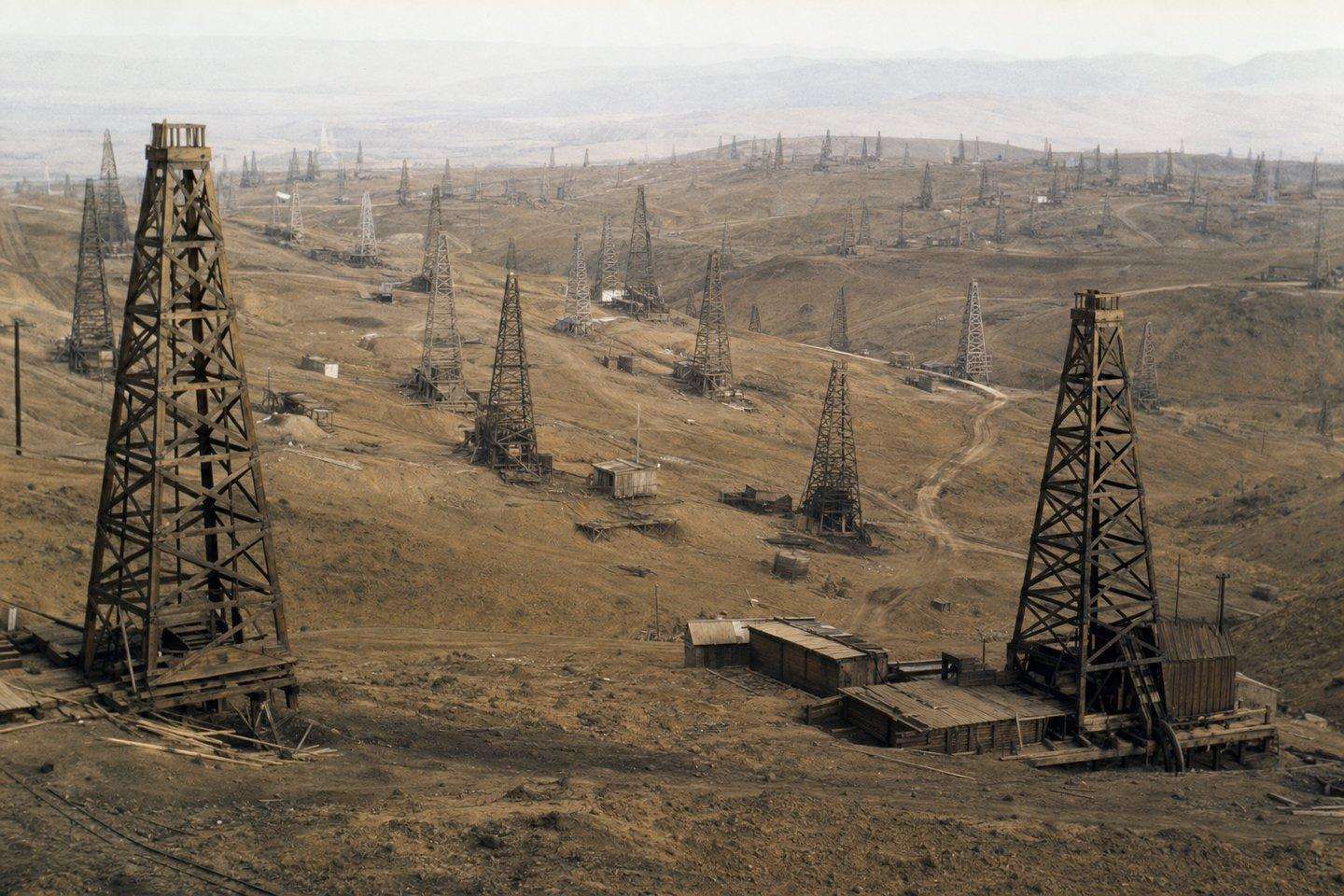
The Lakeview Gusher is a genuinely strange kind of local landmark: a disaster remembered less as a tragedy than as a measure of just how much oil this stretch of Kern County actually held. It’s a useful piece of context for a visitor standing at the museum a few miles north: the volume the field held wasn’t hyperbole, it was a documented, out-of-control fact for a year and a half.
What’s at the museum today
The West Kern Oil Museum was founded in 1973 by a group of local volunteers determined to preserve the region’s oil history before it was lost, and the museum building and grounds opened to the public in October 1980. Its centerpiece is one of the few complete original wooden oil derricks left standing anywhere in the world, built in 1917, over a well drilled in the first weeks after the United States entered World War I. That derrick, known as Jameson #17, survives largely by chance: it was scheduled to be torn down in 1974 before local civic groups intervened, and the Jameson Company ultimately donated the derrick itself along with three acres of surrounding land to establish the museum.
The museum today is run entirely by volunteers, with no paid staff, a fitting continuation of the same grassroots effort that saved the derrick in the first place. It’s open Thursday through Saturday from 10 a.m. to 4 p.m., and Sunday from 1 to 4 p.m., at 1168 Wood Street in Taft.
Visiting Taft’s oil history today
A stop at the museum pairs naturally with simply driving the roads around Taft and Maricopa: Highway 33 and the smaller roads branching off it run directly through active sections of the Midway-Sunset field, so the pumpjacks aren’t staged for visitors; they’re the same working infrastructure the field has run on for generations. For anyone road-tripping between Bakersfield and the coast, or exploring Kern County’s less-visited western edge, it’s a rare chance to see both a preserved piece of oil-boom history and the industry’s ongoing, unglamorous present within the same short drive.
Frequently Asked Questions
What is the West Kern Oil Museum?
A volunteer-run museum in Taft, California, dedicated to the history of Kern County's oil industry. It opened to the public in October 1980, built around a surviving original 1917 wooden oil derrick, and is maintained entirely by volunteers.
What are the West Kern Oil Museum's hours?
Thursday through Saturday, 10 a.m. to 4 p.m., and Sunday, 1 to 4 p.m. It's located at 1168 Wood Street in Taft.
Why is Taft called an oil town?
Taft sits at the edge of the Midway-Sunset Oil Field, the largest oilfield in California and the largest in the continental U.S. by total oil in place. The town was renamed from Moron to Taft in 1909, honoring President William Howard Taft, and incorporated in 1910 as the oil boom took off: by the mid-1920s, more than 7,000 wooden derricks covered the surrounding hills.
What was the Lakeview Gusher?
The largest accidental oil spill in U.S. history. A well blowout near Maricopa, just south of Taft, ran out of control from March 1910 to September 1911, releasing an estimated 9.4 million barrels of crude oil, at its peak flowing around 125,000 barrels a day, most of it lost rather than recovered.
Is the Midway-Sunset Oil Field still active today?
Yes, it remains one of the largest producing oilfields in the country, and was still the top oil producer in the lower 48 states as recently as 1990, a century after its discovery.