
The Desert
Red Rock Canyon State Park California: Striped Cliffs on Highway 14
A 27,000-acre Mojave Desert park of banded red sandstone cliffs, a real Western-movie backdrop, and a primitive campground, about 80 miles from Bakersfield.
Updated September 2026
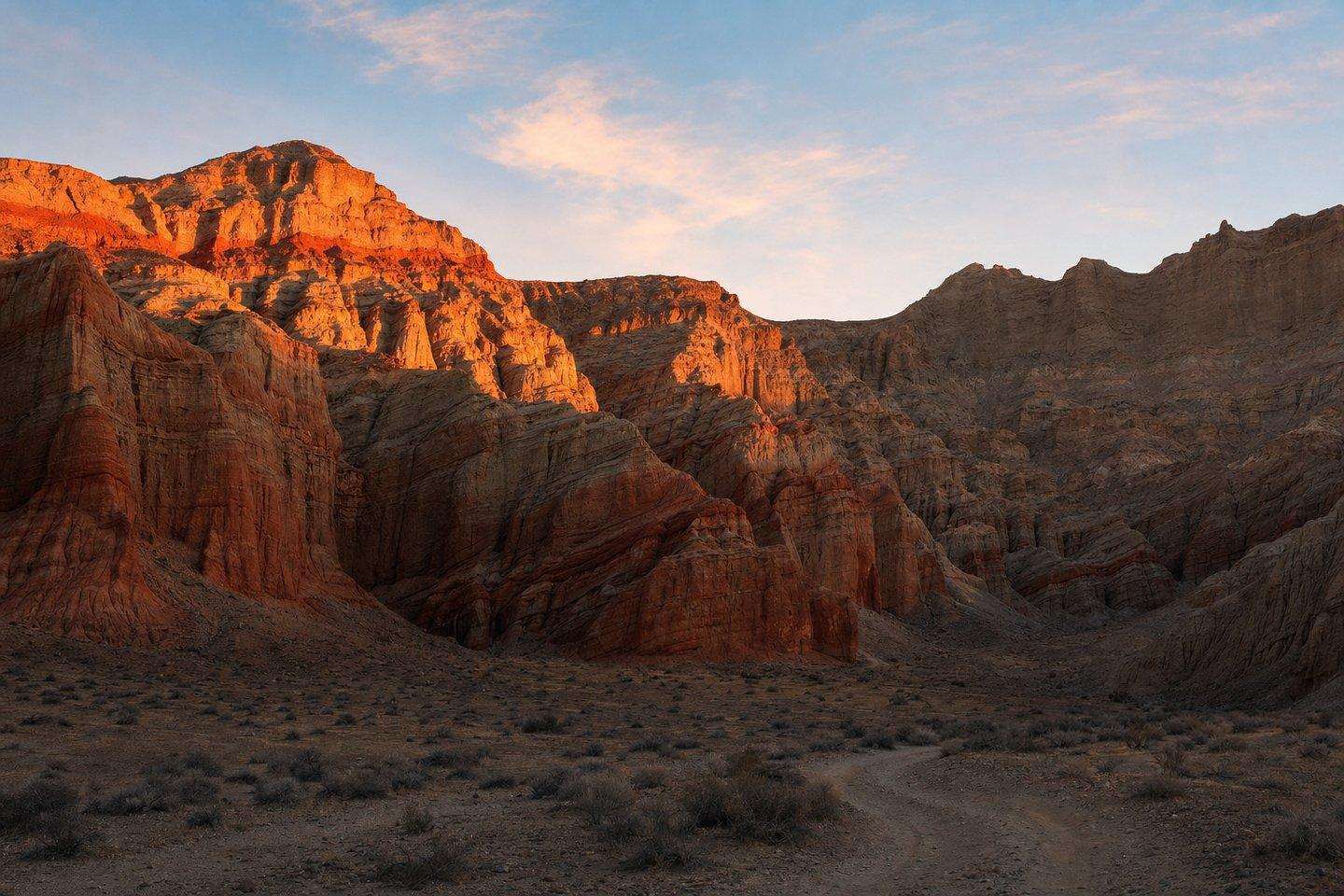
Along Highway 14 in the northern Mojave Desert, where the southern Sierra Nevada meets the El Paso Range, striped cliffs of red sandstone and pale volcanic rock rise out of the desert floor in a formation striking enough that Hollywood found it decades before most tourists did. This is Red Rock Canyon State Park California (not to be confused with the more famous Red Rock Canyon near Las Vegas), a 27,000-acre state park roughly 80 miles from Bakersfield and about 25 miles north of the town of Mojave, near the small community of Cantil.
A landscape shaped over millions of years
What makes Red Rock Canyon State Park California distinctive is its banding: alternating layers of white clay and red sandstone, accented by streaks of pink volcanic rock and dark lava formations: a geologic record that scientists estimate began forming roughly 3 million years ago. Each of the park’s several tributary canyons has its own distinct color pattern and rock shapes, which is part of why the park has drawn photographers, geologists, and filmmakers in roughly equal measure since it was established.
A working landmark before it was a park
Long before Red Rock Canyon became a protected park, its rock formations served a practical purpose: in the 1870s, the canyon’s cliffs were used as a navigational landmark by the 20-mule team wagons hauling borax across the desert, one of the signature industries of the Mojave in that era. The park also preserves the remains of small-scale mining operations from the 1890s, and its canyons have long functioned as a natural travel corridor across an otherwise difficult stretch of desert: a route used by Native American groups for trade for thousands of years before American settlement. The Kawaiisu people are historically associated with this part of the northern Mojave and the mountains just to the west, and the region’s broader desert landscape carries a long record of indigenous presence, including rock art in the nearby mountains.
Red Rock Canyon was established as a California state park in 1968, protecting both its geology and this layered human history under the state parks system.
A recognizable movie backdrop
Since the 1930s, Red Rock Canyon’s dramatic, colorful cliffs have made it a favorite filming location, especially for Westerns: the terrain reads as instantly, classically “Old West” on camera. Films shot here include The Big Country and Man of the West, and the park’s rock formations have shown up in far more varied productions too, from Jurassic Park to television series like The Twilight Zone and Lost in Space. Visitors familiar with mid-20th-century Westerns may recognize specific rock formations without ever having been to the park before.
Ricardo Campground
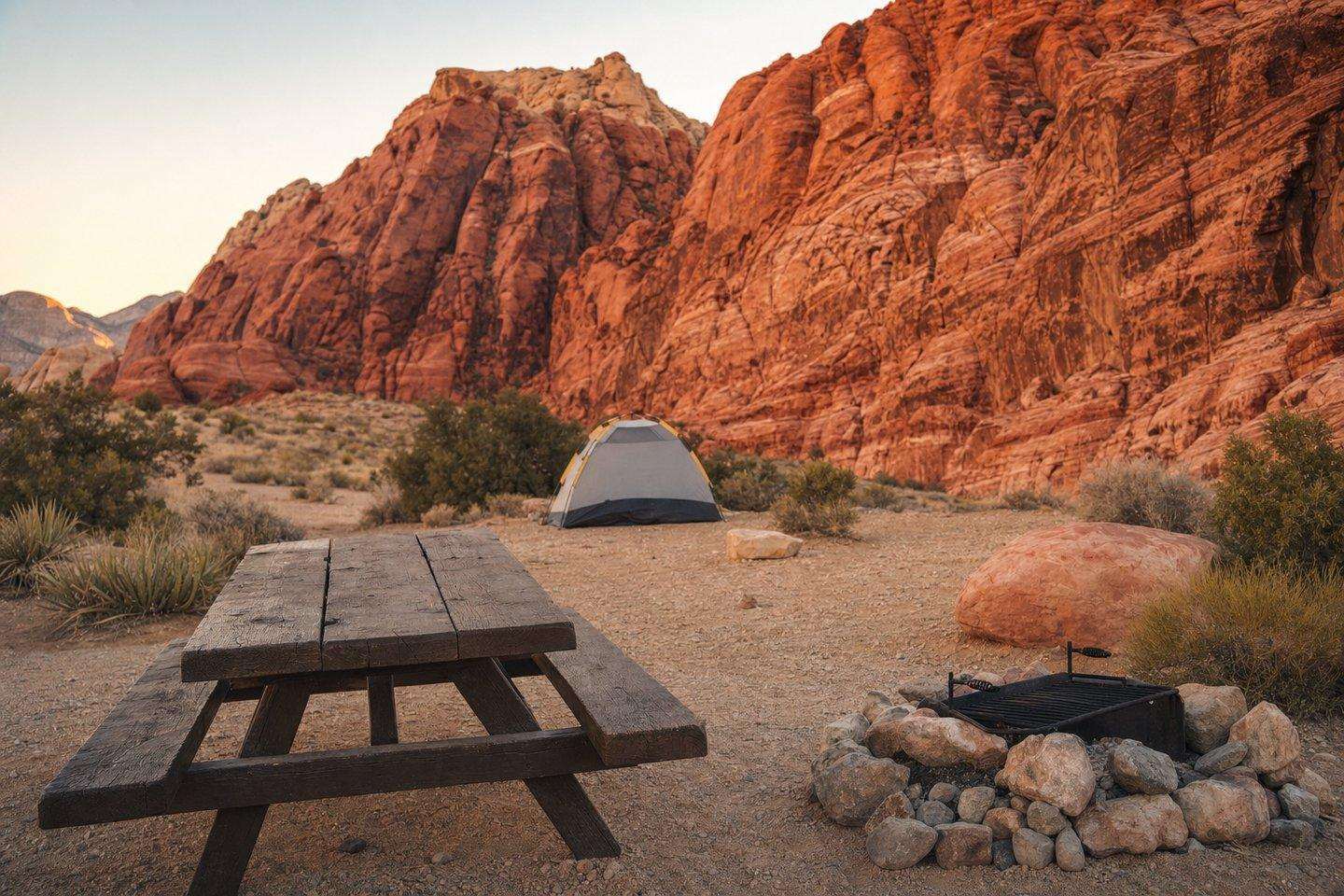
The park’s campground, Ricardo Campground, offers 50 primitive campsites on a first-come, first-served basis (no reservations). Each site has a fire ring, table, and access to potable water and pit toilets, but there are no RV hookups or showers. Sites accommodate vehicles up to 30 feet and up to eight people. As of recent seasons, camping runs $25 per night ($23 for seniors 62 and older). Because sites can’t be reserved ahead of time, arriving earlier in the day (especially on weekends and during the cooler months when desert camping is most comfortable) improves the odds of getting a spot.
Visiting Red Rock Canyon State Park California
Red Rock Canyon State Park California operates on day-use hours from sunrise to sunset, with a day-use fee of $6 per vehicle ($5 for seniors, $3 for visitors with disabilities); the campground itself is accessible around the clock for registered campers. A small visitor center near the campground keeps limited hours, generally Friday afternoons and weekend days, and is a good first stop for trail conditions and current park information.
Because of its desert setting, the park is most comfortable to visit in fall, winter, and spring: summer daytime temperatures regularly climb into triple digits, and there’s little natural shade along most trails. Sturdy footwear, sun protection, and more water than seems necessary are standard advice for anyone hiking into the tributary canyons, where the terrain is uneven and trail markings are minimal by design, preserving the park’s undeveloped character.
For visitors continuing north or south on Highway 14, Red Rock Canyon makes a natural stop between Bakersfield/the Tehachapi area and the Ridgecrest/China Lake area further north, close enough to the highway for a short detour, but remote enough that it rarely feels crowded even on a busy weekend.
Frequently Asked Questions
How far is Red Rock Canyon from Bakersfield?
About 80 miles, along Highway 14, and roughly 25 miles north of the town of Mojave.
How big is Red Rock Canyon State Park?
About 27,000 acres; it was Kern County's first state park, established in 1968.
Can I camp at Red Rock Canyon?
Yes, the Ricardo Campground has around 50 primitive, first-come-first-served sites, $25 per night ($23 for seniors), with fire rings and picnic tables but no hookups or showers.
Has Red Rock Canyon been used in movies?
Extensively: at least 175 documented films and TV pilots have used it as a backdrop since 1921, including Jurassic Park, Westworld, and the original 1932 The Mummy.
What are the day-use hours and fees at Red Rock Canyon?
The park operates sunrise to sunset for day use, with a $6 per-vehicle fee ($5 for seniors, $3 for visitors with disabilities). The campground is accessible around the clock for registered campers.