
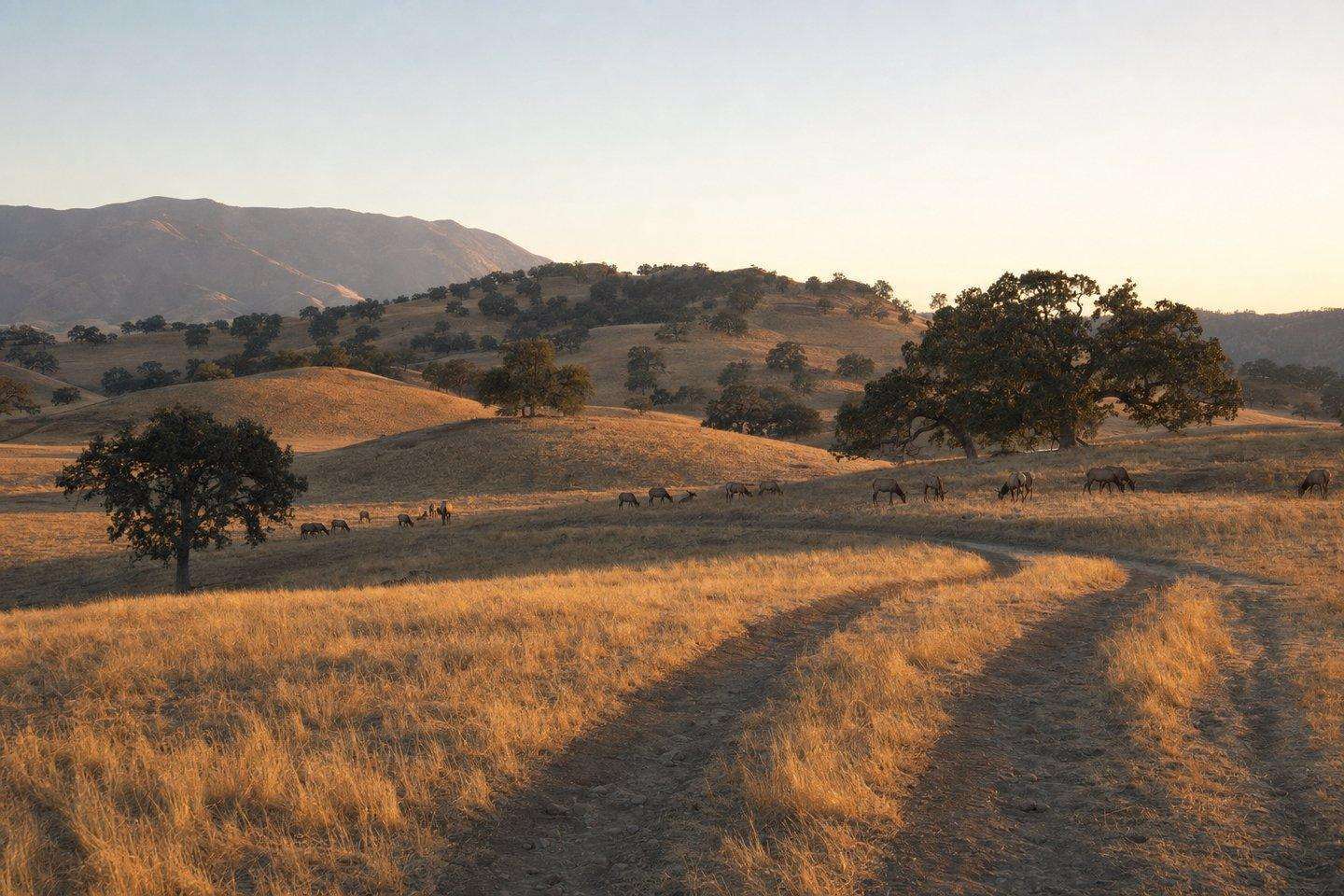
The Valley
Wind Wolves Preserve: A Nature Preserve Southwest of Bakersfield
A nonprofit-owned preserve spanning tens of thousands of acres where the San Joaquin Valley meets the Transverse Ranges, with free trails and tule elk.
Updated September 2026
Southwest of Bakersfield, where the flat farmland of the southern San Joaquin Valley gives way abruptly to mountains, sits one of the largest privately protected landscapes on the West Coast: Wind Wolves Preserve. It’s owned and managed by The Wildlands Conservancy, a nonprofit land trust, and open to the public free of charge, yet it remains one of the county’s least-visited major natural areas, largely because it isn’t a state or national park with the name recognition that comes with that.
Wind Wolves Preserve: scale and setting
Wind Wolves Preserve covers roughly 93,000 acres (about 145 square miles), making it one of the largest nature preserves on the West Coast under nonprofit ownership. The Wildlands Conservancy acquired the land in 1996. Its address is technically Bakersfield (16019 Maricopa Highway), but the preserve itself sits southwest of the city along Highway 166, in the area where the San Joaquin Valley floor meets the southern end of the Coast Ranges and the western edge of the Transverse Ranges.
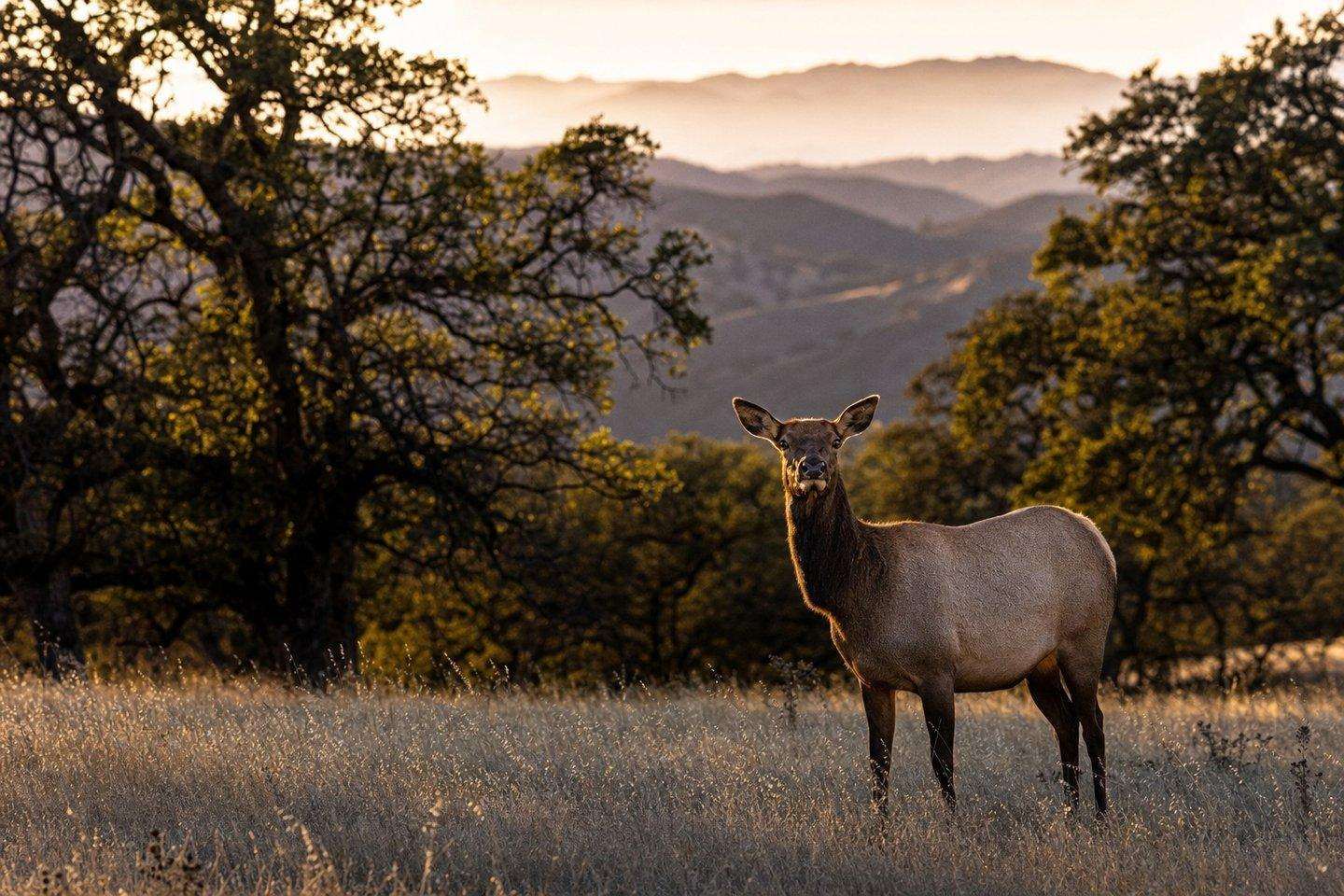
That meeting point of mountain ranges is what makes the preserve ecologically unusual: elevation across the property ranges from about 640 feet at the valley floor to over 6,000 feet at its highest points, and that range compresses several distinct habitat types into one property: valley grassland and saltbush scrub at the bottom, blue oak and valley oak savanna with riparian wetlands through the middle elevations, and juniper, pinyon, and conifer forest (including ponderosa pine) higher up.
Wildlife
The preserve’s habitat diversity supports a correspondingly wide range of species, including several that are rare or endangered elsewhere in the valley: the San Joaquin kit fox, the blunt-nosed leopard lizard, and the Bakersfield cactus, a plant found almost nowhere outside this stretch of Kern County. Restored wetlands on the property host large nesting colonies of tricolored blackbirds, a species in sharp decline across California.
The preserve’s most visible wildlife success story is its tule elk herd. The Wildlands Conservancy reintroduced tule elk to the property starting in 1998 with a small founding group of animals; the herd has since grown into the hundreds, and elk sightings are one of the main draws for visitors willing to hike or drive the preserve’s back roads at the right time of day.
Visiting
Wind Wolves is open to the public daily, with free admission: a deliberate policy of The Wildlands Conservancy, which operates several preserves across California on a no-fee, public-access model. Trails range from short interpretive loops to longer backcountry routes; named trails include the Wildflower Loop, the Redtail Trail, and the San Emigdio Canyon Trail, giving hikers, mountain bikers, and birdwatchers options across the elevation range. For a different Kern County birding destination, see our Kern River Preserve guide, an Audubon-managed riparian forest near Weldon. Preserve trails close after sunset and vehicle access after hours is prohibited, so plan visits within daylight hours.
For anyone wanting more than a day trip, the preserve also operates the San Emigdio Campground, offering a modest number of tent and camper-van sites (vehicles up to 21 feet; no RV hookups) with potable water, flush toilets, and picnic tables; reservations are arranged directly through the preserve rather than a general booking platform, and stays are capped at a few nights per visit.
An annual event with local roots
Wind Wolves Preserve has also become a recurring host site for a Spring Nature Festival, a family-oriented event with guided hikes, wildlife programs, and educational activities tied to the valley’s wildflower season, historically the preserve’s highest-traffic weekend of the year, and the closest thing it has to a signature public event.
Why it’s worth the drive
Because Wind Wolves sits at the literal edge of three overlapping landscapes (valley floor, oak foothills, and mountain forest), a single visit can move through more distinct terrain than almost anywhere else in the county in one trip, without an entrance fee or a crowded parking lot. It’s a natural complement to a Bakersfield-based itinerary for visitors who want a genuine backcountry experience within a half-hour or so of the city, and its tule elk herd is a rare chance to see a species that was nearly extinct in California a century ago, now reestablished on its own historic range.
Frequently Asked Questions
How big is Wind Wolves Preserve?
Roughly 93,000 acres at the southern edge of the Central Valley, where it transitions into the Transverse Ranges, managed by The Wildlands Conservancy since 1996.
Is Wind Wolves Preserve open to the public?
Yes, free and open daily; it's one of the more accessible large nature preserves in the region.
What wildlife can I see at Wind Wolves Preserve?
Tule elk have been reintroduced to the preserve since 1998, alongside native oak-savanna and grassland habitat spanning an elevation range from about 640 to over 6,000 feet.
Is Wind Wolves Preserve good for wildflowers?
Yes, it has a dedicated Wildflower Loop Trail and holds an annual Spring Nature Festival timed to the bloom, with guided hikes and wildlife presentations.
Can I camp at Wind Wolves Preserve?
Yes, the San Emigdio Campground offers camping within the preserve for overnight visitors.