
The Desert
Red Rock Canyon Movies: A Century as Hollywood's Backdrop
With at least 175 documented films and pilots shot there since 1921, Red Rock Canyon is one of the most-filmed landscapes in Hollywood history.
Updated September 2026
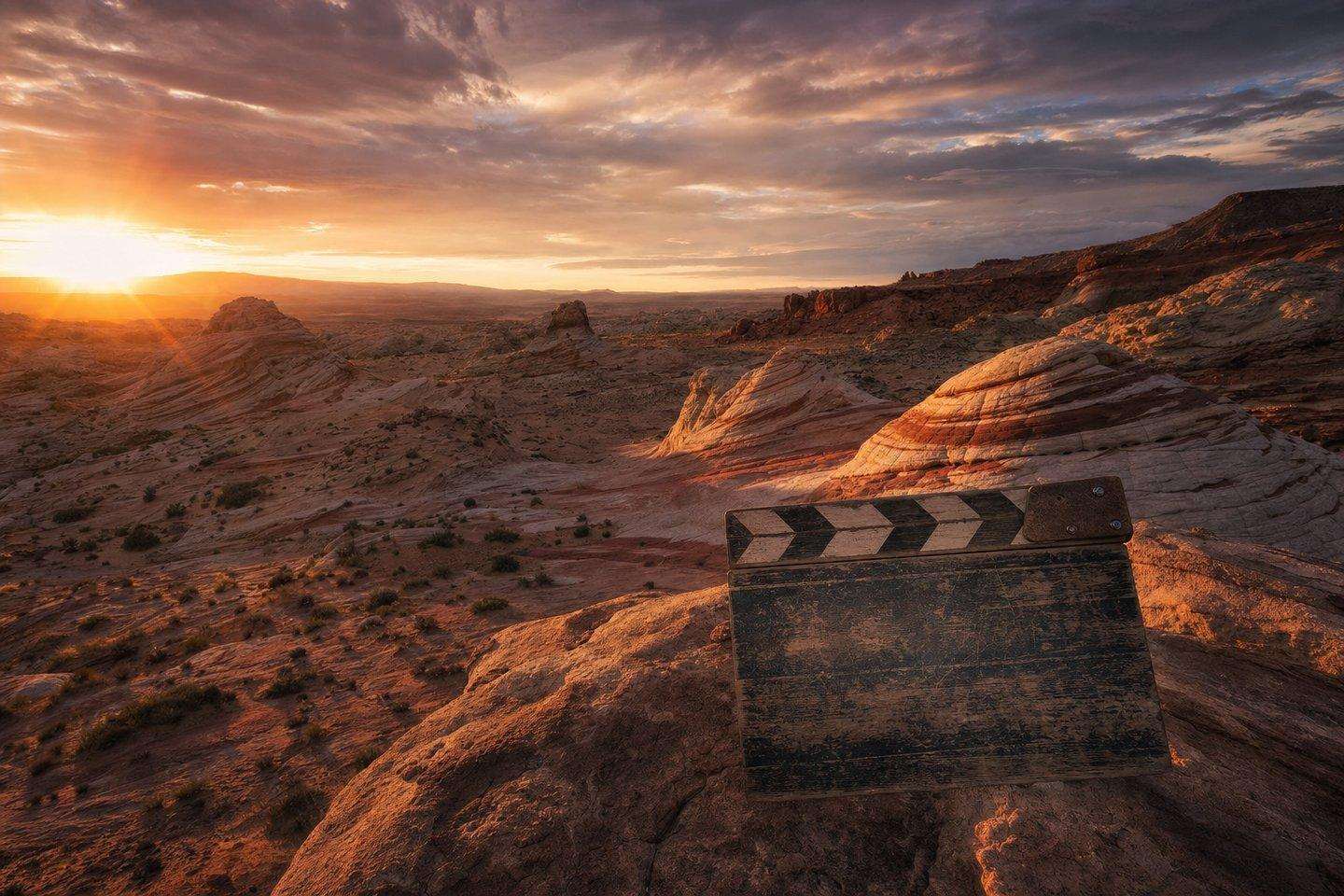
Red Rock Canyon movies go back further than most visitors expect. Long before Kern County was known for the Bakersfield Sound, its desert landscape was already famous, just not under its own name. The eroded cliffs and buttes of Red Rock Canyon, in the northern Mojave Desert about 25 miles north of the town of Mojave, have stood in for the American West, alien planets, and prehistoric Earth in Hollywood productions for over a century.
Red Rock Canyon movies: the film history
Most Red Rock Canyon movies share the same source: the state park’s striking geology (layered white clay, red sandstone, and dark volcanic rock carved into cliffs and buttes) made it a natural fit for filmmakers almost as soon as cameras started heading out of Los Angeles. The earliest known production shot there was a 1921 silent film, “Sage-Brush Musketeers,” and roughly 15 more silent-era films followed before sound pictures arrived in 1929. By one documented count, at least 175 films and television pilots have included footage shot at Red Rock Canyon.
Its most consistent use has been as a Western backdrop: classics like “The Big Country” and “Man of the West” used the canyon’s rock formations as stand-ins for open frontier country, and Westerns remained the site’s bread and butter for decades. But the canyon’s otherworldly look also made it a go-to location well beyond the Western genre: Boris Karloff’s original “The Mummy” (1932) filmed there, and later productions used it for everything from science fiction to disaster films, including “The Andromeda Strain,” “Westworld,” “Beneath the Planet of the Apes,” and “Capricorn One.” Its best-known modern credit is “Jurassic Park” (1992), which used the canyon’s terrain for several of the film’s iconic desert and badlands shots.
Television productions have used the site as well, including episodes of “The Twilight Zone,” reflecting how frequently the canyon turns up in mid-century American film and TV whenever a production needed a striking, uninhabited Western landscape within a few hours of Los Angeles.
Why this stretch of desert kept getting picked
Red Rock Canyon’s appeal to filmmakers comes down to a few practical facts: it’s dramatic-looking, relatively close to Los Angeles studios, and (because it sits along State Highway 14, not deep in trackless desert) logistically easier to reach with film crews and equipment than more remote parts of the Mojave. That combination of visual drama and accessibility is the same reason it’s now a protected state park rather than an obscure roadside curiosity (see our overview of the county’s parks and public lands for more on the park itself).
Beyond Red Rock Canyon
Of all Red Rock Canyon movies and productions, this remains Kern County’s best-documented filming location, but it’s not the only stretch of the county’s desert and mountain terrain that has drawn productions over the decades. The broader Mojave Desert region around Kern County has a long relationship with the film industry that predates most of the county’s other tourism draws. Visitors specifically chasing filming locations should treat Red Rock Canyon as the primary, verifiable stop; claims about other specific local filming sites are harder to confirm and vary by source, so it’s worth checking with the park directly or a local film-history source before building a trip around a particular title.
Visiting today
Red Rock Canyon State Park is open to the public year-round for sightseeing, hiking, camping, and photography, with no motorist services inside the park itself, so visitors should fuel up and pack water before heading in. There’s no cost to simply pull off Highway 14 and take in the same rock formations that have been photographed for a hundred years of American film.
Frequently Asked Questions
Why has Red Rock Canyon been used in so many movies?
Its layered white clay, red sandstone, and dark volcanic rock made it a natural fit for filmmakers almost as soon as cameras started heading out of Los Angeles: it's dramatic-looking, relatively close to LA studios, and accessible via State Highway 14 rather than deep trackless desert.
What's the earliest known film shot at Red Rock Canyon?
A 1921 silent film called 'Sage-Brush Musketeers,' with roughly 15 more silent-era productions following before sound pictures arrived in 1929.
What famous modern films used Red Rock Canyon?
Jurassic Park (1992) is its best-known modern credit, using the canyon's terrain for several iconic desert and badlands shots. Other productions include The Andromeda Strain, Westworld, and Boris Karloff's original 1932 The Mummy.
How many productions have filmed at Red Rock Canyon?
By one documented count, at least 175 films and television pilots have included footage shot there, spanning nearly a century of American film and TV production.
Can I visit the film locations at Red Rock Canyon today?
Yes, the park is open to the public year-round for sightseeing, hiking, camping, and photography. There's no cost to pull off Highway 14 and see the same rock formations that have appeared on screen for a hundred years.