
The Desert
Petroglyph Park and the Ancient Rock Art of the Ridgecrest Area
Ridgecrest's Petroglyph Park displays replicas of nearby ancient carvings: the real collection sits on restricted land and needs a guided tour to see.
Updated September 2026
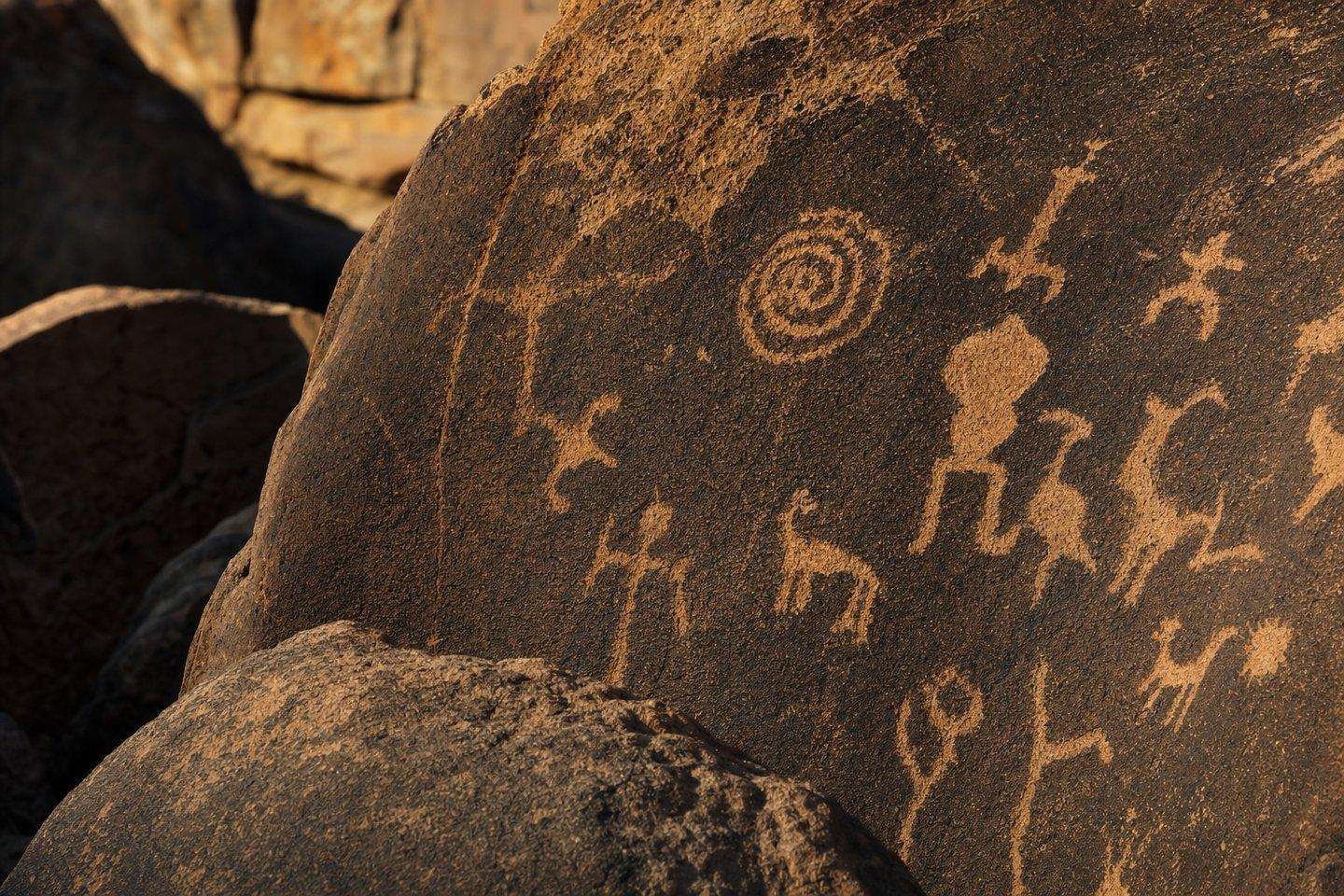
The name is a little misleading, and it’s worth being upfront about that: Petroglyph Park itself, a 12-acre public park in Ridgecrest built in 2014, doesn’t sit on top of ancient rock art. It’s a modern community park (trails, picnic areas, a playground, restrooms) built to honor and interpret Native American culture, and it displays replicas of the far older, far more significant petroglyphs found nearby in the Coso Range. The real thing is close by, but it’s on land the public can’t simply walk onto.
The real petroglyphs: Coso Rock Art District
A short distance from Ridgecrest, inside the Naval Air Weapons Station China Lake, lie Big and Little Petroglyph Canyons, together known as the Coso Rock Art District. Little Petroglyph Canyon alone holds an estimated 20,000 documented images, making it one of the largest concentrations of Native American rock art in North America. The carvings are attributed to the Coso people, ancestors of Numic-speaking groups in the region, and scholars generally connect the imagery (which includes extensive depictions of bighorn sheep) to hunting rituals and shamanic vision-quest traditions, though interpretation of specific images remains a subject of ongoing research rather than settled fact.
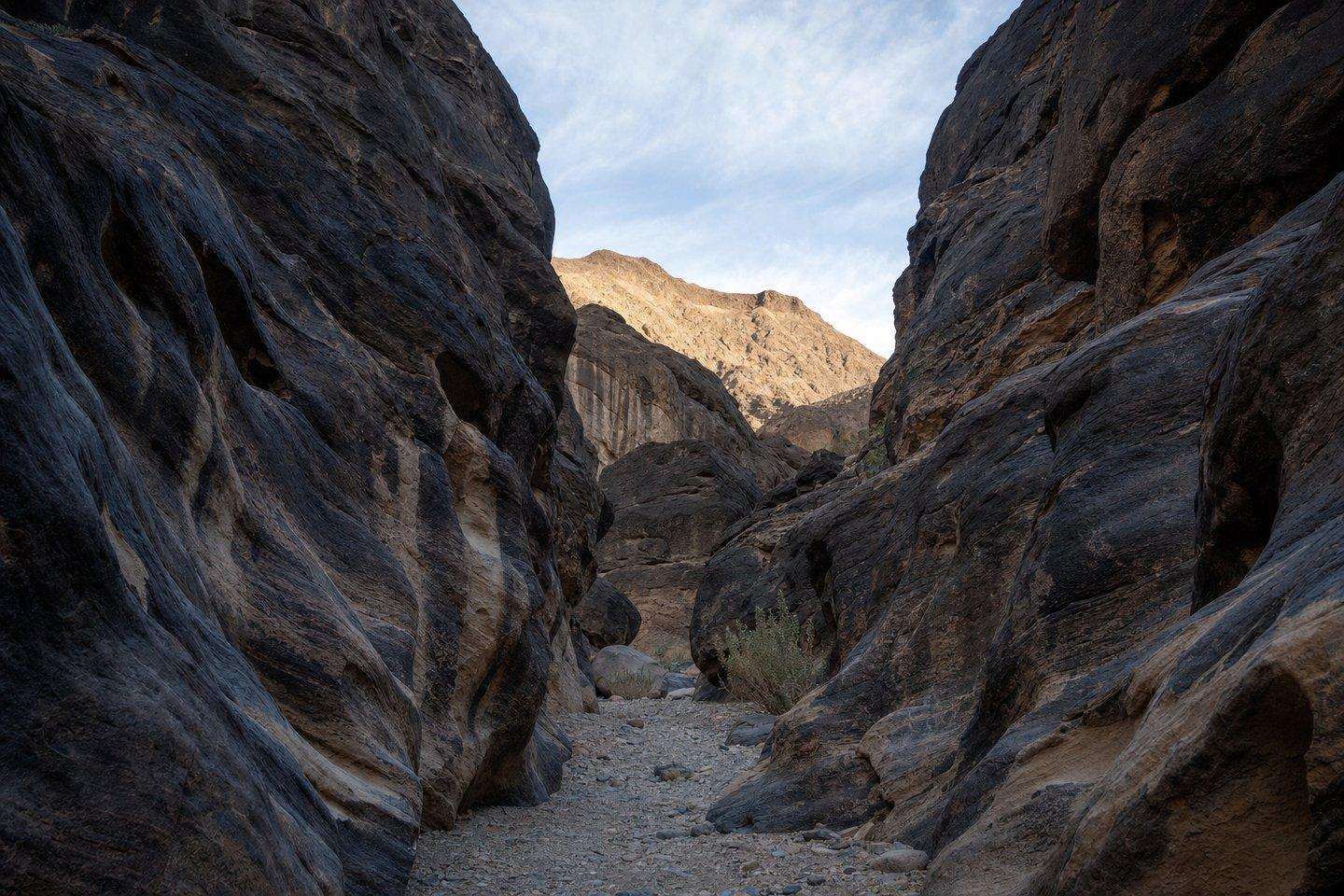
Both canyons were designated National Historic Landmarks in 1964 and were folded into the larger Coso Rock Art District in 2001, recognizing them as a nationally significant archaeological and cultural site.
Why you can’t just drive there
Because the canyons sit inside an active Navy weapons testing range, public access is tightly restricted: this isn’t a matter of a locked gate you could ask around, it’s a live military installation. The only way for the general public to see the actual petroglyphs is through guided tours arranged via the Maturango Museum in Ridgecrest (also covered in our museums guide), which coordinates access with the base on a limited schedule. Anyone genuinely set on seeing the ancient carvings, rather than the park’s replicas, should plan through the museum well ahead of a visit rather than showing up expecting walk-in access.
What to actually expect at Petroglyph Park
For visitors who can’t arrange a Coso tour, Petroglyph Park in town is a reasonable and easy stop: a shaded, family-friendly park with reproductions of some of the region’s best-known petroglyph imagery, laid out with interpretive context about the Coso people’s history and the significance of the real sites nearby. It’s also the home base for the annual Ridgecrest Petroglyph Festival, a weekend event celebrating the Coso people’s history and the region’s rock art tradition. Treat the park as an introduction and a monument rather than the archaeological site itself: the two are genuinely different things, a few miles apart, with very different levels of access.
Visiting the park and planning a Coso tour
The Ridgecrest Petroglyph Festival has grown into a paired event, now generally held as the Ridgecrest Petroglyph Festival and Intertribal Pow Wow over the first weekend of November, timed to National Native American Heritage Month. Alongside the park’s permanent replica displays, the weekend adds pow wow dancing, drumming, and vendors, drawing a broader regional crowd than the park sees on an ordinary day.
For visitors set on seeing the real Coso petroglyphs rather than the park’s replicas, the Maturango Museum generally runs its guided tours only in spring and fall, since coordinating access with an active weapons range depends on weather and the base’s own operational schedule as much as museum planning. Reservations need to be made well ahead of a trip, a fee applies, and every participant must present valid photo identification to enter the base. Museum tours have at times been suspended entirely when base operations required it, so it’s worth confirming a scheduled tour is still running with a call shortly before a visit rather than assuming a booking guarantees access. None of that logistics applies to Petroglyph Park itself: it keeps normal park hours, costs nothing to visit, and needs no advance planning at all.
A note on respect
The Coso petroglyphs represent a documented cultural and archaeological record going back thousands of years, and they’re treated accordingly by the institutions that manage access to them: restricted, guided, and framed around preservation rather than casual tourism. Visitors interested in the real sites should go through the Maturango Museum’s official tour process rather than seeking informal access to restricted federal land.
Frequently Asked Questions
Is 'Petroglyph Park' in Ridgecrest a real ancient site?
No, the modern community park in Ridgecrest built in 2014 features replica carvings, not the actual ancient rock art. The real ancient petroglyphs are in the Coso Rock Art District.
Where can I see real ancient petroglyphs in Kern County?
The Coso Rock Art District, including Big and Little Petroglyph Canyons, holds an estimated 20,000+ images and has been a National Historic Landmark since 1964. But it sits on China Lake Naval Air Weapons Station with restricted access, only reachable via guided tours through the Maturango Museum.
Who created the Coso petroglyphs?
They're attributed to the Coso people, part of the region's Native American history in the northern Mojave Desert.
How do I book a tour of the real petroglyphs?
Guided access to the Coso Rock Art District runs through the Maturango Museum in Ridgecrest, since the site itself is on active military land with restricted entry.
Are there other rock-art sites in the area?
The El Paso Mountains, east of Red Rock Canyon, also hold rock carvings created by early indigenous inhabitants, though they're less documented than the Coso district.