
The Desert
Stargazing in the Mojave Desert and Kern County's Mountains
Red Rock Canyon's desert skies and Mount Pinos' high-elevation viewing are genuinely dark-sky destinations within reach of Southern California.
Updated September 2026
Southern California isn’t known for dark skies: most of the region sits under a permanent orange glow from Los Angeles and its sprawl. Kern County is one of the real exceptions, with two genuinely dark-sky destinations that draw dedicated astronomers, not just casual stargazers hoping to see a few extra stars.
Red Rock Canyon’s desert dark skies
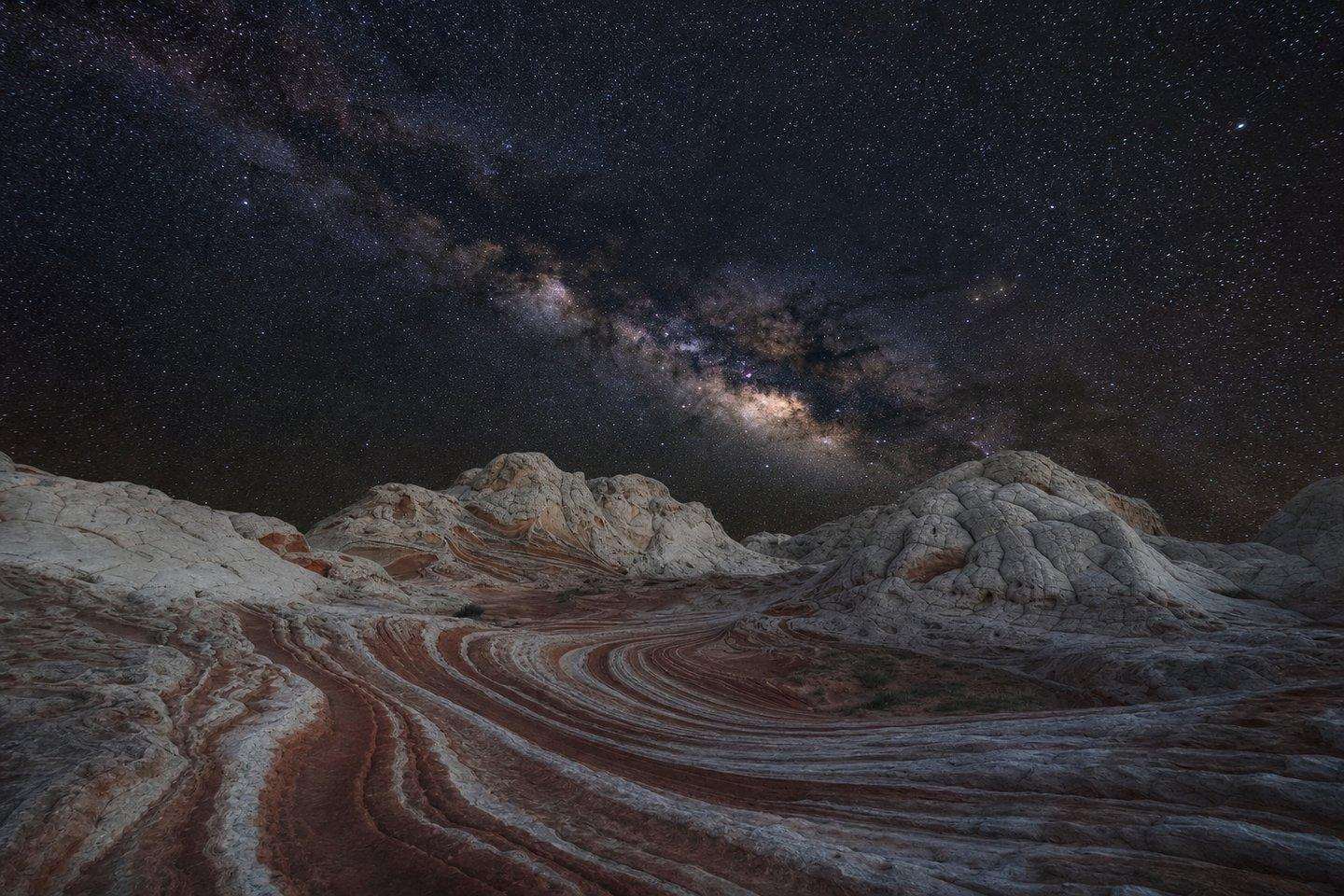
Red Rock Canyon State Park, already known for its striped sandstone cliffs and film-location history, doubles as a real dark-sky destination once the sun goes down. The park is rated Bortle class 2-3 in its northern reaches (a genuinely dark rural-to-near-pristine sky classification), grading to a still-respectable rural-sky rating further south, where light pollution from nearby desert towns has more of an effect. On a clear, moonless night, visitors with dark-adapted vision can pick out the Andromeda and Triangulum galaxies with the naked eye, and the central Milky Way shows real structure rather than the faint gray smear it becomes under typical suburban skies.
The park runs a regular schedule of educational stargazing events, pairing astronomer-led presentations and constellation tours with hands-on telescope viewing, a good option for visitors who want context and guidance rather than just a dark parking lot and a hope for clear skies. Given Red Rock Canyon’s real history as a Western-movie backdrop (see our movies guide), it’s a rare place that offers both a striking daytime landscape and a genuinely dark night sky in the same visit.
Red Rock Canyon sits roughly 25 miles northeast of the town of Mojave on Highway 14, the main road running through the park, and a day-use fee of around $6 per vehicle applies at the visitor center and picnic areas. Ricardo Campground, the park’s only campground, offers 50 first-come, first-served sites for around $25 a night, and it’s also where the China Lake Astronomical Society regularly hosts public star parties, telescopes included, making it the most practical option for anyone who’d rather camp under those dark skies than drive back out after sunset.
Mount Pinos: Southern California’s premier dark-sky site
For visitors willing to drive further and climb higher, Mount Pinos (at 8,847 feet, straddling the Kern-Ventura county line near the mountain communities of Frazier Park and Pine Mountain Club) is widely regarded as the best stargazing location in Southern California. Its Bortle 3-4 skies combine extremely low light pollution with the clarity that comes from real elevation, well above the haze and turbulence that affects lower-elevation viewing sites. The summit’s parking area is popular enough among serious astronomers that the Los Angeles Astronomical Society regularly uses it as a primary observing site on weekend evenings, and it draws both amateur stargazers and professional astrophotographers on clear nights.
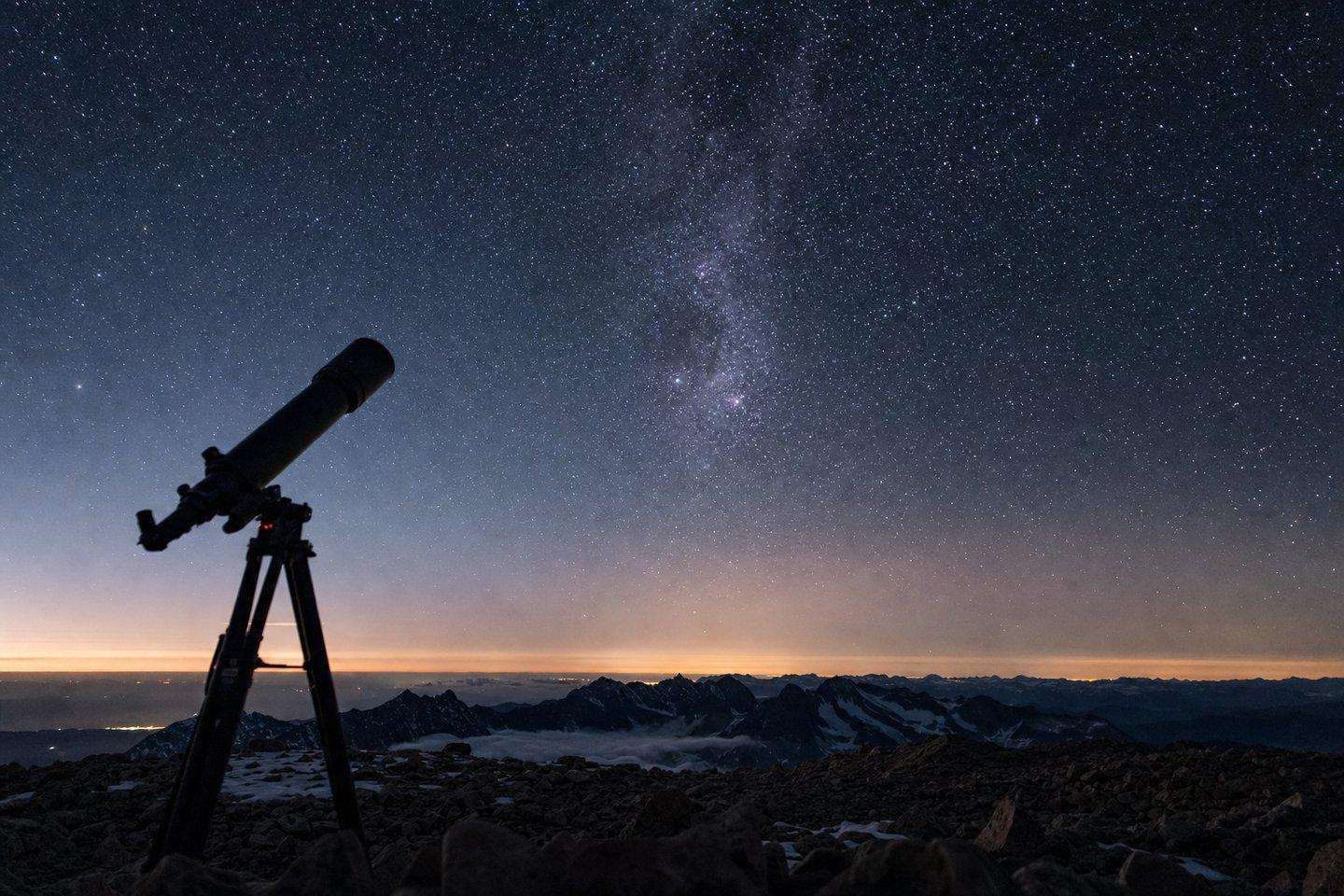
New-moon weekends from April through October are considered the optimal window at Mount Pinos, combining the darkest possible skies with the mountain’s more reliably clear, snow-free conditions. Winter viewing is possible but far less predictable given the elevation.
Getting there involves a real drive: from Interstate 5, the Frazier Park exit leads about six miles west on a road that becomes Cuddy Valley Road and then Mt. Pinos Road, ending at the Chula Vista parking area near the summit. For visitors who’d rather stay the night than drive back down a mountain road in the dark, the small Chula Vista Campground sits a short walk from that same parking lot, its dozen tent sites shaded by Jeffrey pines. It has no showers, wifi, or electricity, though cell coverage in the immediate area is generally usable. Camping there is free outside the winter months; in winter, a day-use fee (or an annual pass) applies, since the same parking lot doubles as a popular snow-play area once the snow arrives.
Planning a stargazing trip
Both destinations reward planning around the lunar calendar: a bright moon washes out the fainter details that make these sites worth the drive in the first place, so checking moon phase before a trip matters as much as checking the weather forecast. Dress warmer than daytime temperatures would suggest at either location; desert and high-mountain nights cool fast even after a hot Kern County day, and Mount Pinos’ elevation means real cold is possible even outside winter.
A few smaller items are worth packing alongside the warm layers. A red-filtered flashlight rather than a standard white one is standard etiquette at both sites: red light preserves night vision, while white light, even briefly, ruins the eyes’ dark adaptation for everyone else on a shared viewing field, including neighbors with telescopes already focused. A reclining chair or a blanket for lying flat while looking straight up makes an extended session far more comfortable than standing and craning your neck, and it’s worth having a fully charged phone before setting out, since reception can be spotty at both locations, particularly in Red Rock Canyon’s more remote sections. For a broader sense of what else the desert side of the county offers alongside its night skies, see our things-to-do guide and Red Rock Canyon guide.
Frequently Asked Questions
Is Red Rock Canyon actually good for stargazing?
Yes, it's a Bortle class 2-3 site in its northern reaches (ranging to a still-good rural-sky rating further south), genuinely dark by Southern California standards. On a clear, moonless night with dark-adapted vision, visitors can see the Andromeda and Triangulum galaxies with the naked eye, and the Milky Way shows real structure rather than a faint smudge.
Where is the best stargazing spot in Kern County?
Mount Pinos, at 8,847 feet on the Kern-Ventura county line, is widely considered the premier stargazing location in Southern California: Bortle 3-4 skies, extremely low light pollution, and frequent clear nights. The Los Angeles Astronomical Society regularly uses its summit parking area as a primary observing site.
When is the best time to stargaze at Mount Pinos?
New-moon weekends from April through October are considered the optimal viewing window, combining darker skies with more reliably clear, snow-free conditions at the mountain's high elevation.
Does Red Rock Canyon host stargazing events?
Yes, the park runs a schedule of educational stargazing events with astronomer presentations, constellation tours, and telescope viewing, run in partnership with local astronomy groups.
Why does light pollution matter less at these two sites?
Both sit far enough from major population centers, and at Mount Pinos, high enough in elevation, that they avoid the sky-glow that washes out stars closer to Bakersfield or the Los Angeles basin, genuinely rare in Southern California, where very few places still have close-to-natural dark skies.