
The Desert
Randsburg: A Living Gold-Mining Ghost Town
A gold strike in 1895 turned empty Mojave Desert into a boomtown of thousands within a few years. Unlike most mining camps, Randsburg was never fully abandoned.
Updated September 2026
Most California gold-rush towns followed the same arc: a strike, a boom, a bust, and then abandonment, leaving behind a preserved-but-empty historic site, or nothing at all. Randsburg took a different path. It boomed just as hard as any of them, and then it simply never fully emptied out.
A desert strike that built a town fast
In April 1895, prospectors Frederic Mooers, John Singleton, and Charles Burcham struck gold at what would become the Yellow Aster Mine, in the Mojave Desert northeast of what’s now Ridgecrest. The settlement that sprang up around the find took its name from South Africa’s Rand mining district, a nod to that region’s own famous gold rush. Growth started modestly: by the end of 1895, Randsburg had just thirteen buildings, some of them nothing more than canvas tents. That didn’t last long.
By January 1897, Randsburg had grown to around 2,000 residents and more than 300 buildings. By 1899, the population had climbed past 3,500, supported by a real small-city commercial district: four general stores, four lumber yards, four meat markets, and ten saloons serving a boomtown workforce. The Yellow Aster Mine itself turned out to be a genuinely major producer, credited with more than $60 million in precious metals extracted over its operating life: not a minor claim that happened to draw a crowd, but a real, substantial gold-mining operation.
A boom that faded but never fully ended
Large-scale mining wound down around World War II, as it did in most of California’s historic gold districts. But where most comparable boomtowns emptied out entirely once the ore ran thin, Randsburg never was fully abandoned. A small, genuine community held on through the decades that followed, and it’s still there today: the 2020 census counted 45 residents, making Randsburg a real, if very small, living town rather than a preserved museum piece with no one left in it.
Johannesburg and Red Mountain: the rest of the district
Randsburg didn’t boom alone. It’s one of three mining towns strung along what’s now U.S. Route 395 between Ridgecrest and Boron, together forming the Rand Mining District: Randsburg itself, Johannesburg just to the south, and Red Mountain a few miles further on. Johannesburg was laid out in 1896, within a year of the Yellow Aster strike, specifically as a planned service town for the surrounding mining camps, its own name borrowing from the same South African gold district as Randsburg’s. Red Mountain started life under a different name, Osdick, before a second boom gave the town its current identity: in 1919, a rush of silver discoveries on the mountain the town is named for touched off a fresh wave of development, and by 1920 more than 100 mines were operating in the area. Between the original gold at Randsburg, tungsten and scheelite mined nearby during World War One, and the later silver rush at Red Mountain, the district survived on more than one mineral and more than one boom, which is part of why enough of it held on to still be visible today. All three towns retain historic buildings and a genuine, unpolished character, and pairing a stop in Johannesburg or Red Mountain with a Randsburg visit gives a fuller picture of the district than Randsburg alone.
Randsburg sits off Highway 395, reached via a short paved spur road between Ridgecrest and California City. There’s no gas station in town, and services are minimal even by small-desert-town standards, so the practical move is to fuel up and carry extra water before making the drive out, especially in summer, when the heat is a real consideration for a stop that involves walking a fairly exposed main street with little shade.
Walking Butte Avenue today
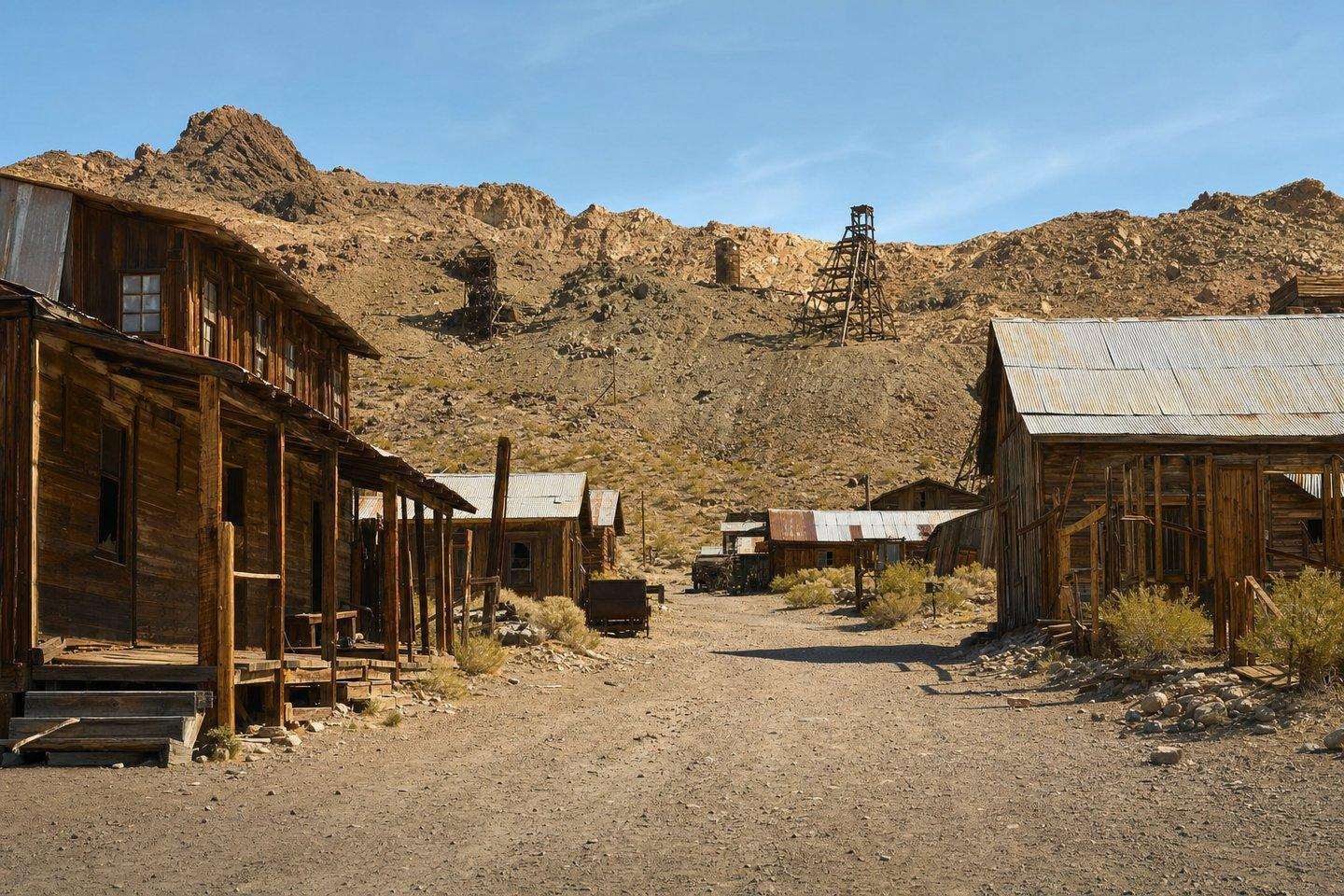
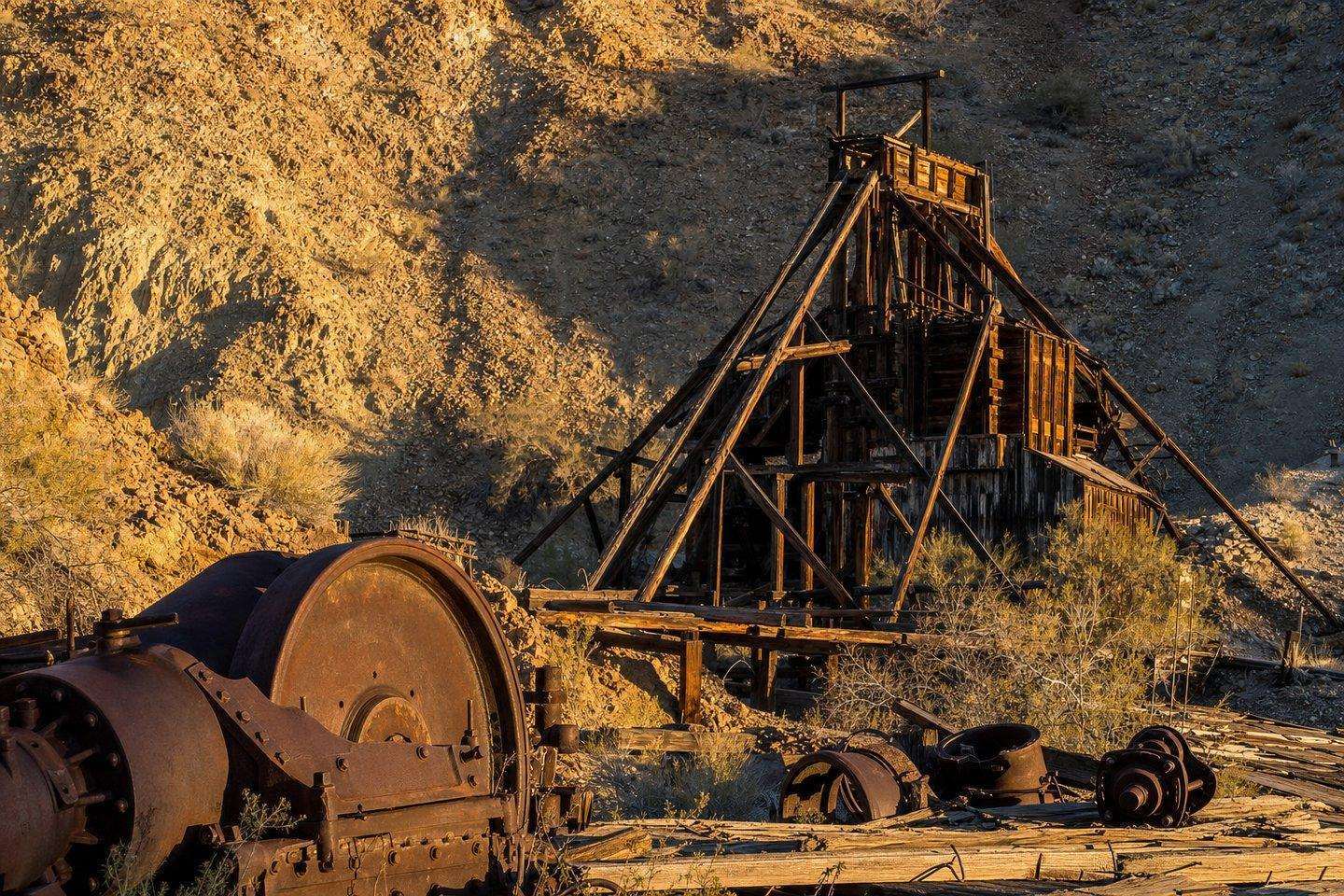
Randsburg’s historic main street, Butte Avenue, is where most of what survives is concentrated: rusted mining equipment left where it stood, weathered original wood-front buildings, a tiny historic jail, and small shops selling antiques and rock-hound supplies to the visitors who make the drive out. The small Rand Desert Museum, covering the district’s mining history in more depth, sits right in town as well.
The catch for planning a visit: most of Randsburg’s shops and the museum keep limited hours, mostly on weekends. A Saturday or Sunday trip is genuinely the difference between finding the town’s businesses open and finding a very quiet street with locked doors, worth building into a trip itinerary rather than discovering on arrival. Our day trips guide covers Randsburg alongside Kern County’s other routes out from Bakersfield, and the Rand Desert Museum entry in our museums guide has more on the district’s mining history.
Frequently Asked Questions
How did Randsburg start?
Prospectors Frederic Mooers, John Singleton, and Charles Burcham discovered gold in April 1895 at what became the Yellow Aster Mine. The town was named after South Africa's Rand mining district. By the end of 1895 it had just 13 buildings, some of canvas; within a few years it had grown into a real boomtown.
How big did Randsburg get?
By January 1897 the town had around 2,000 residents and more than 300 buildings; by 1899, over 3,500 people lived there, supported by four general stores, four lumber yards, four meat markets, and ten saloons.
Why is Randsburg called a "living" ghost town?
Unlike most California mining boomtowns, Randsburg was never fully abandoned even after World War II ended large-scale mining in the area. About 45 people live there today, per the 2020 census. That's a real, if very small, town rather than a preserved-but-empty historic site.
How much gold came out of Randsburg?
The Yellow Aster Mine alone is credited with over $60 million in precious metals extracted over its operating life (a genuinely major producer for its era, not a minor claim).
What's there to see in Randsburg today?
Butte Avenue, the historic main street, still has rusted mining equipment, weathered original buildings, a tiny historic jail, and the small Rand Desert Museum. Most shops and the museum keep limited, mostly weekend hours, so a Saturday or Sunday visit works best.